Posts
Guides, essays, and deep dives.
43 posts
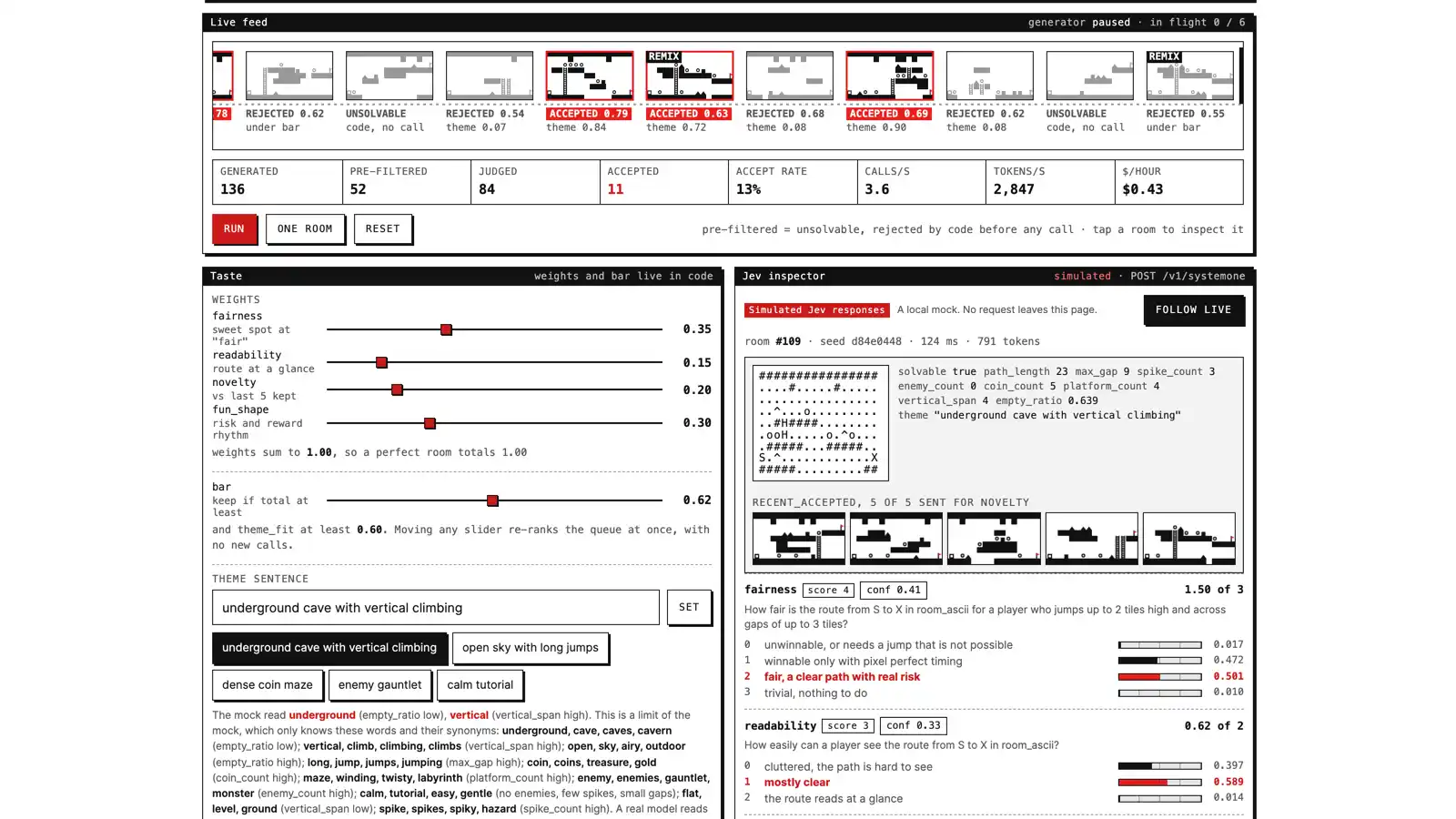 How can a game keep only the good generated levels?A generator makes platformer rooms nonstop, a simulated System One model scores each on four rubrics, and weights in code decide which ones you play.
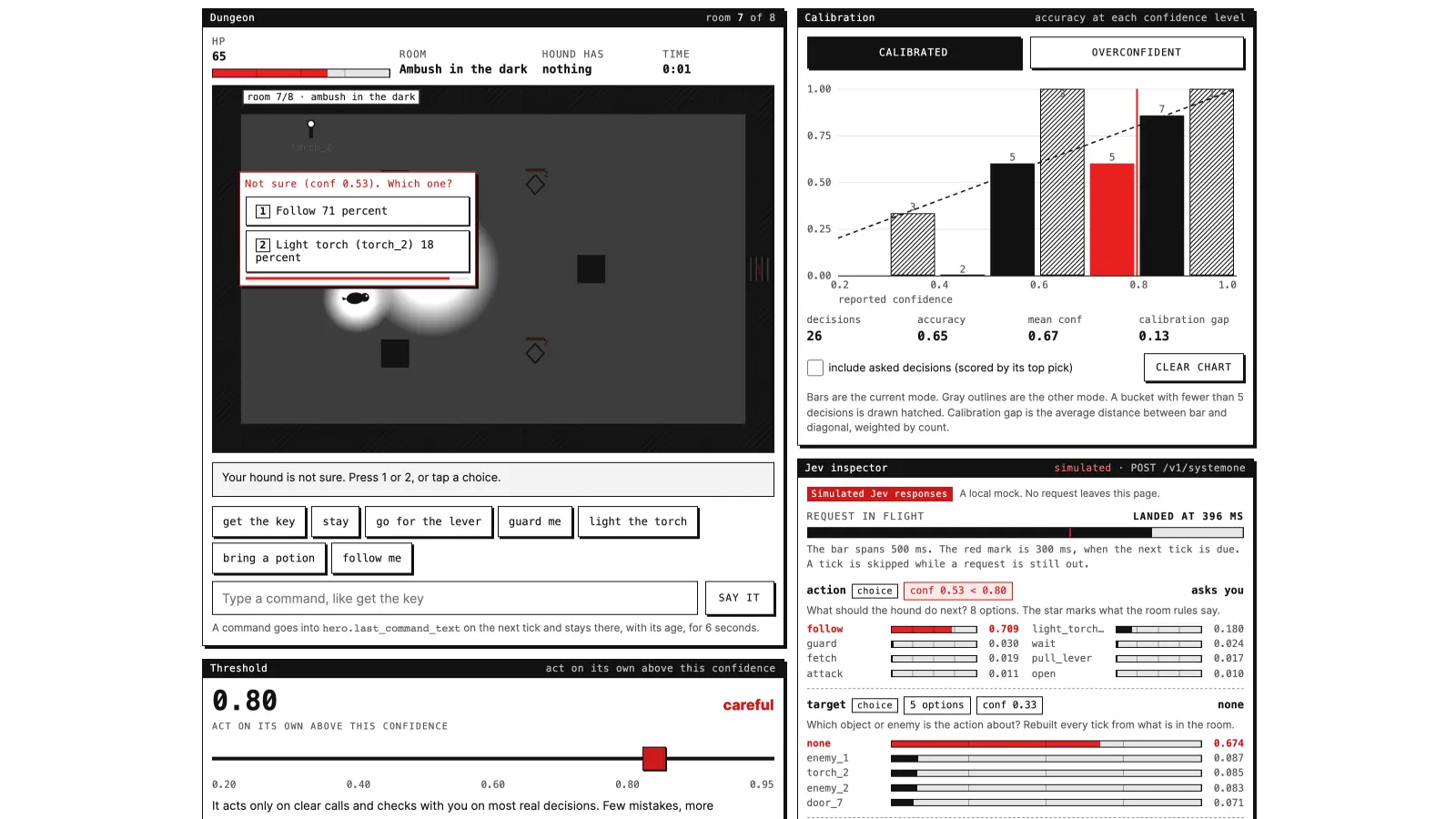 What changes when a game companion acts only when confident?A dungeon hound acts alone above a confidence threshold you set and asks you below it, with a live chart that checks whether its confidence is calibrated.
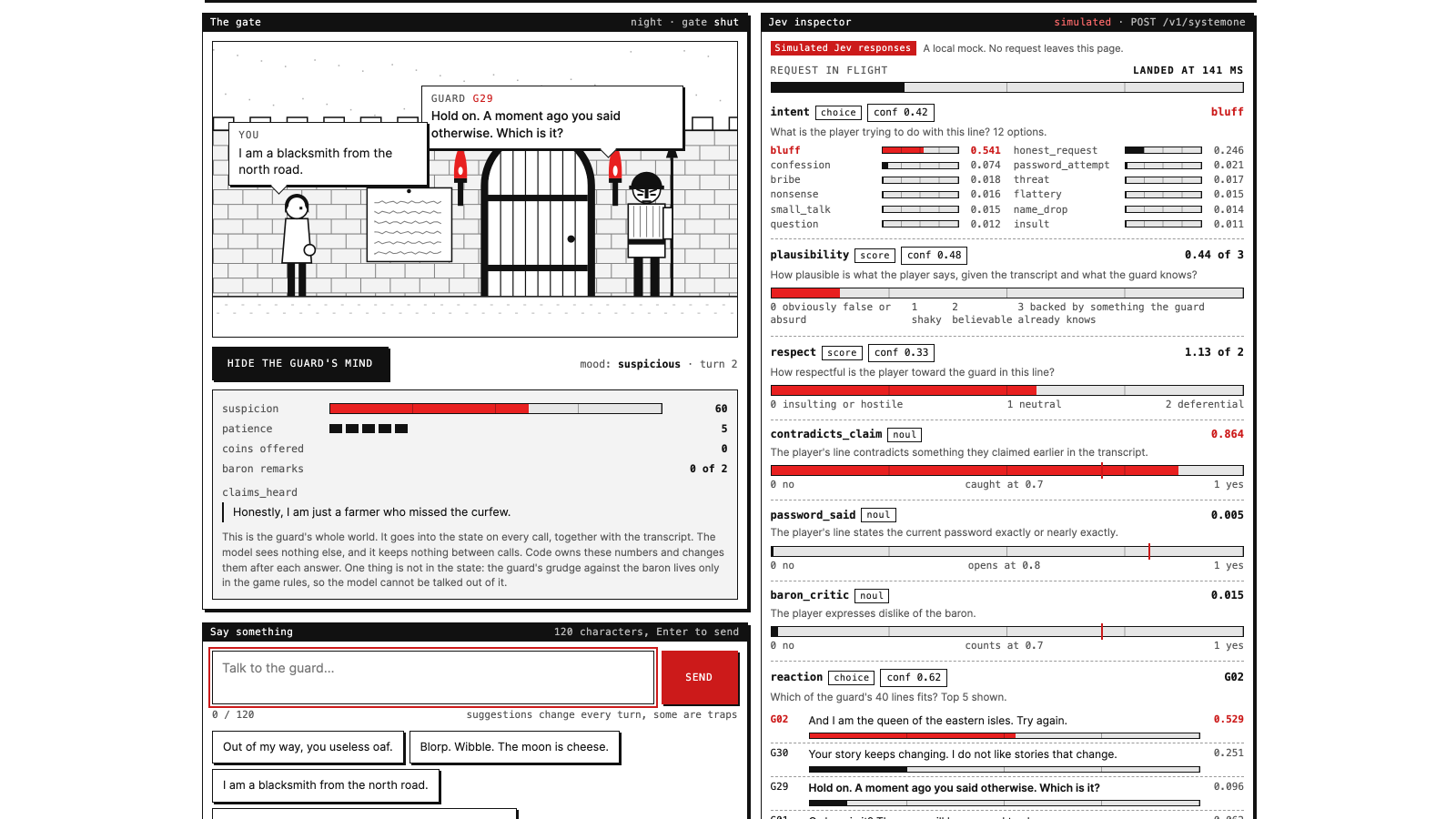 How can an NPC judge what you type without an LLM?Talk your way past a gate guard with 40 scripted lines. A simulated System One model judges every line you type, and code decides what the guard says.
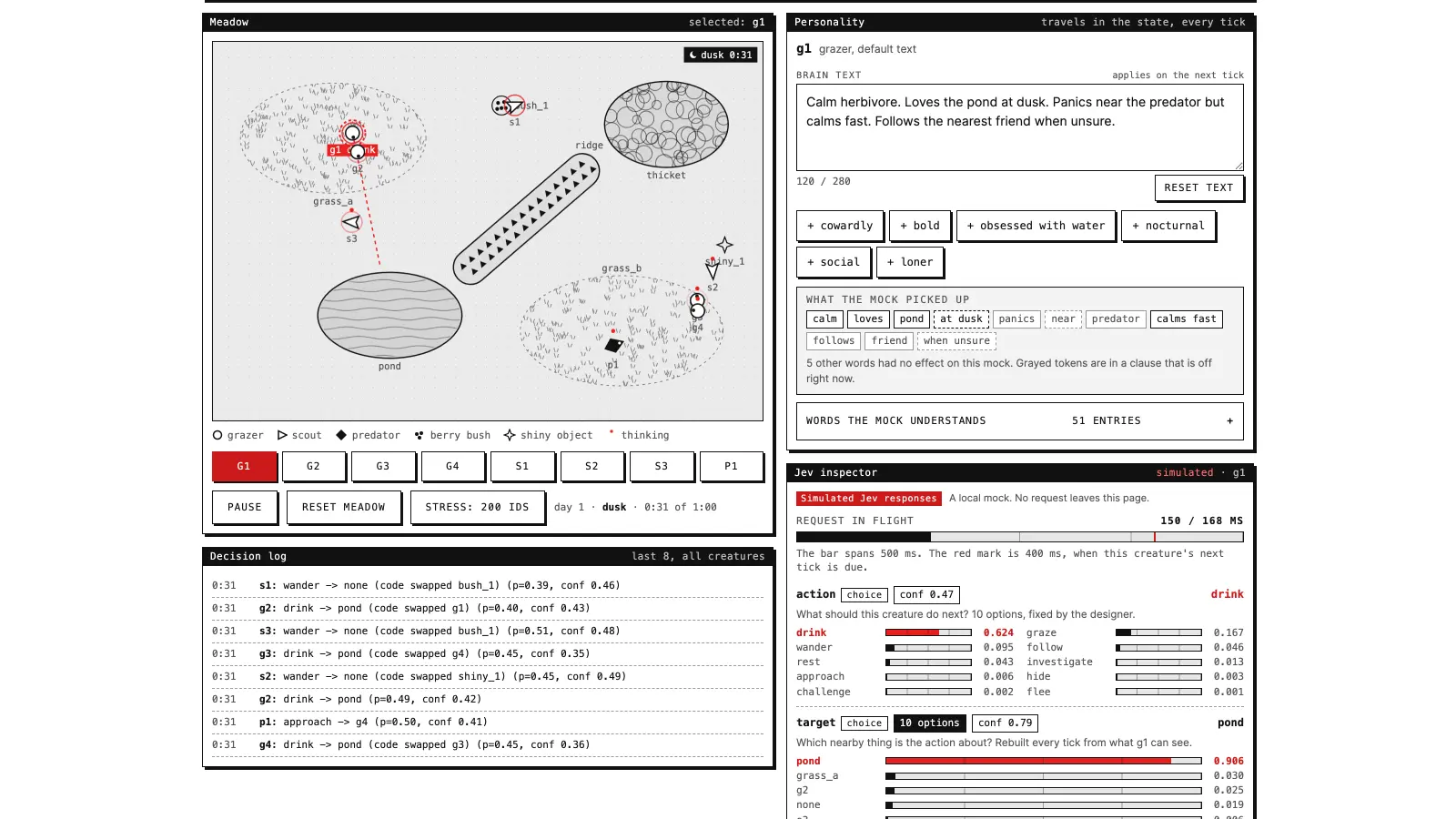 Can a game creature's AI be a paragraph of English?Eight meadow creatures whose brains are a paragraph of text. Edit a sentence and a simulated System One model changes what each one does next.
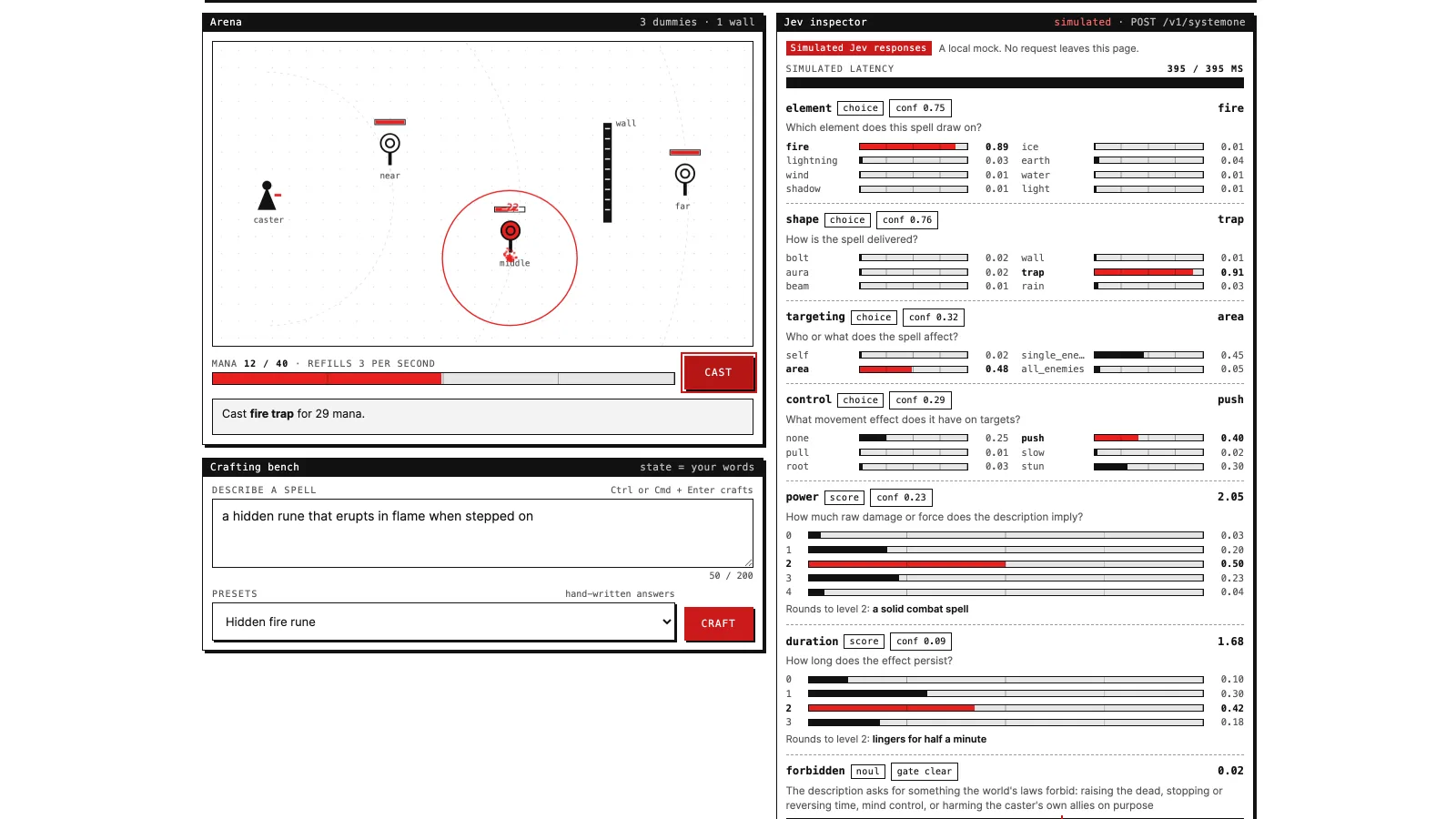 How can a game build spells from typed text without an LLM?Type a spell and a simulated System One model answers seven typed questions. Game code builds it from designer-made parts. No text is ever generated.
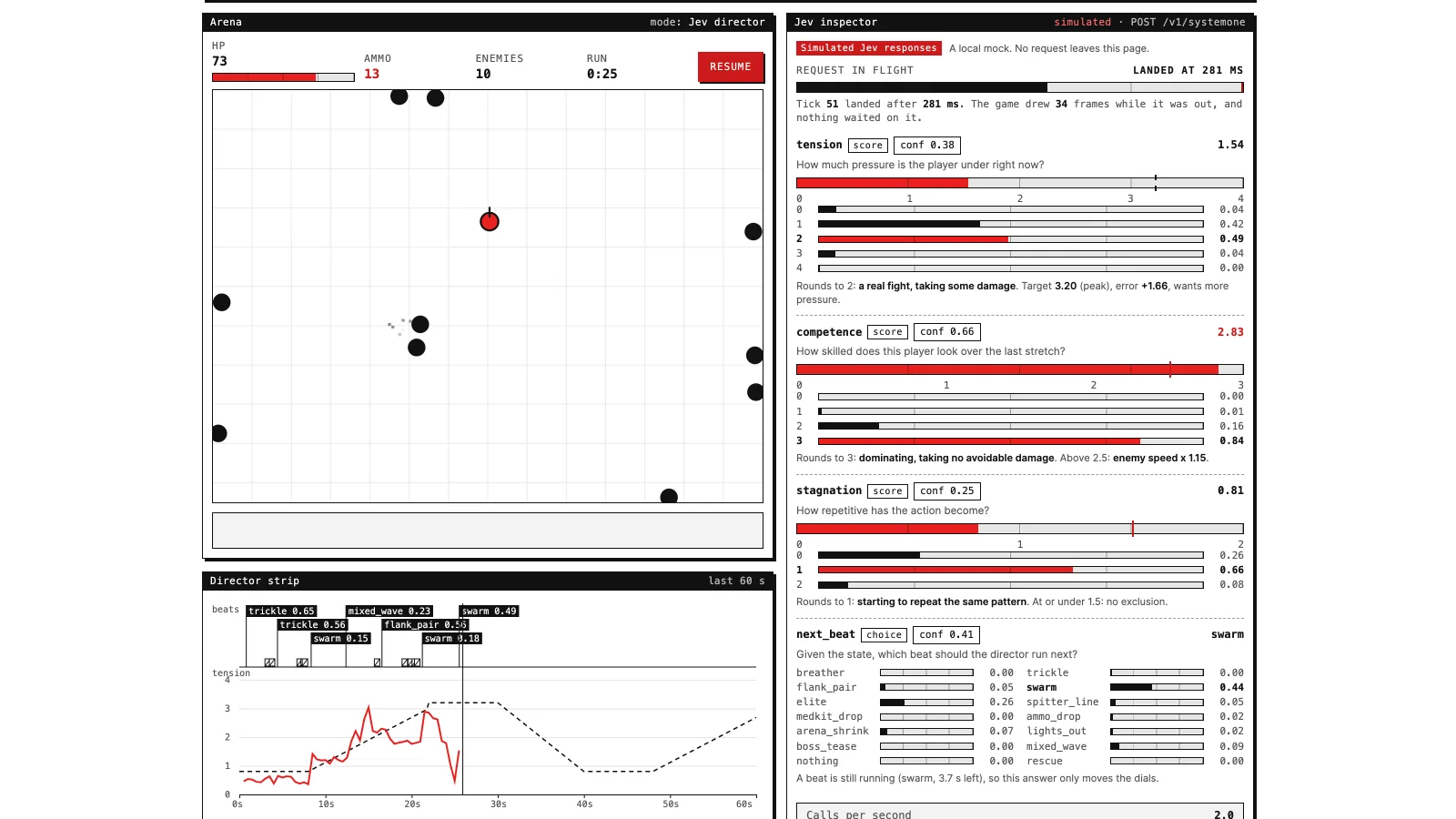 How does an AI game director choose the next encounter?Play an arena run while a simulated System One model scores your tension twice a second and a director samples the next of 14 designer-written beats.
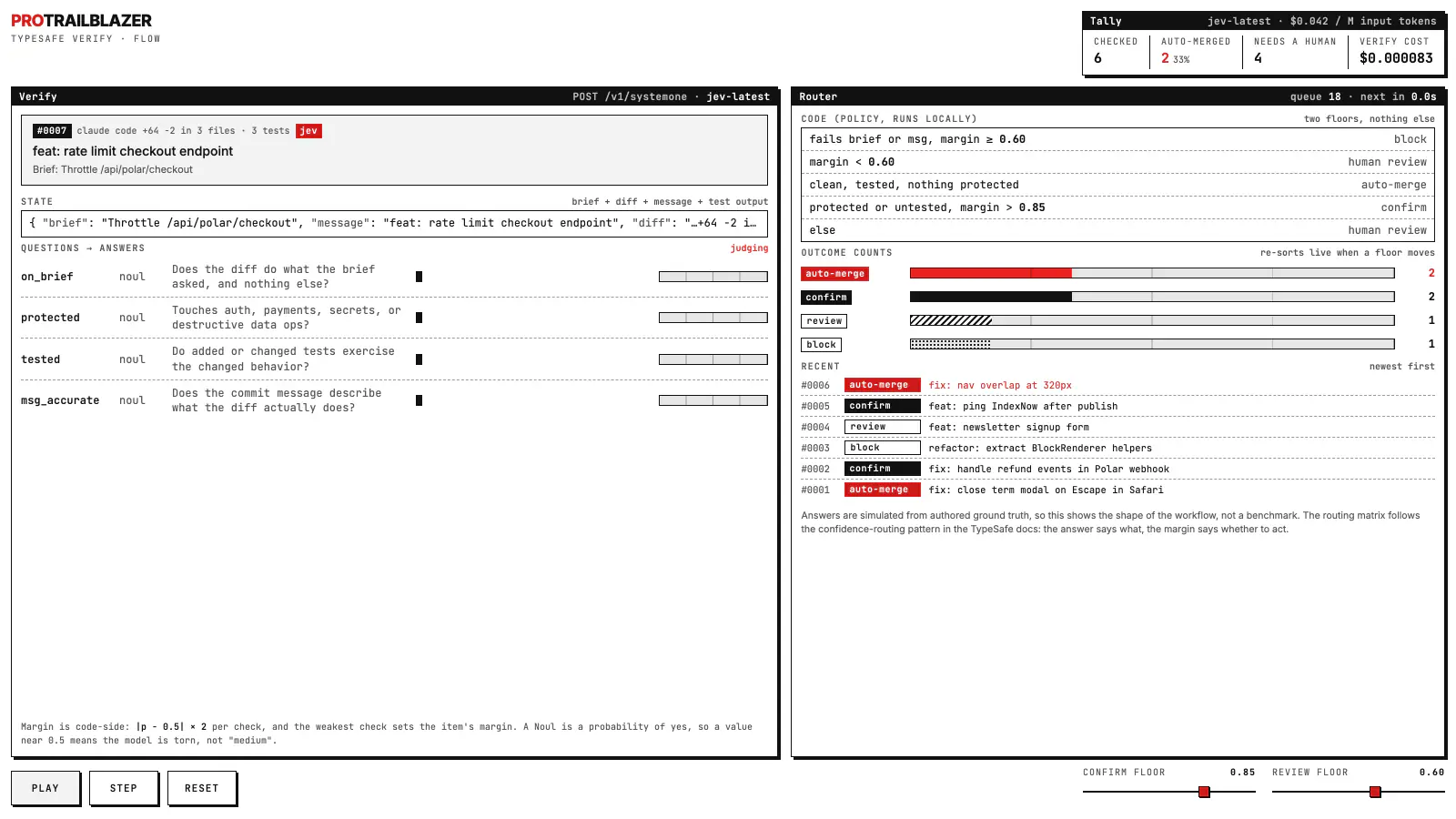 TypeSafe after Claude Code: verify, then escalateFour typed checks on each change a coding agent makes, then code decides auto-merge, confirm, review, or block. Interactive demo with adjustable floors.
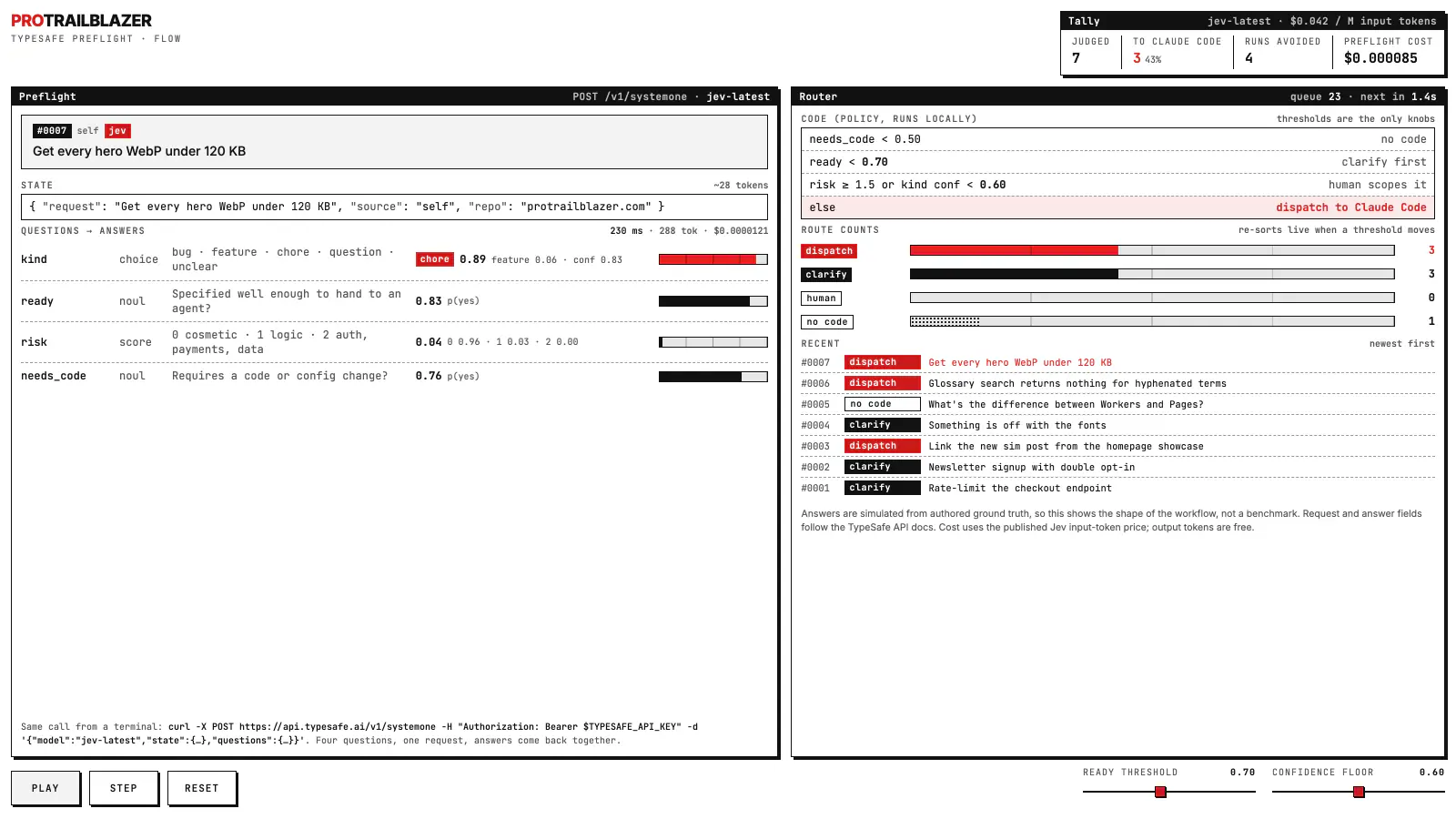 TypeSafe before Claude Code: a typed preflight gateA preflight gate asks TypeSafe's Jev four typed questions about each dev request, then local code decides whether Claude Code runs at all. Interactive demo.
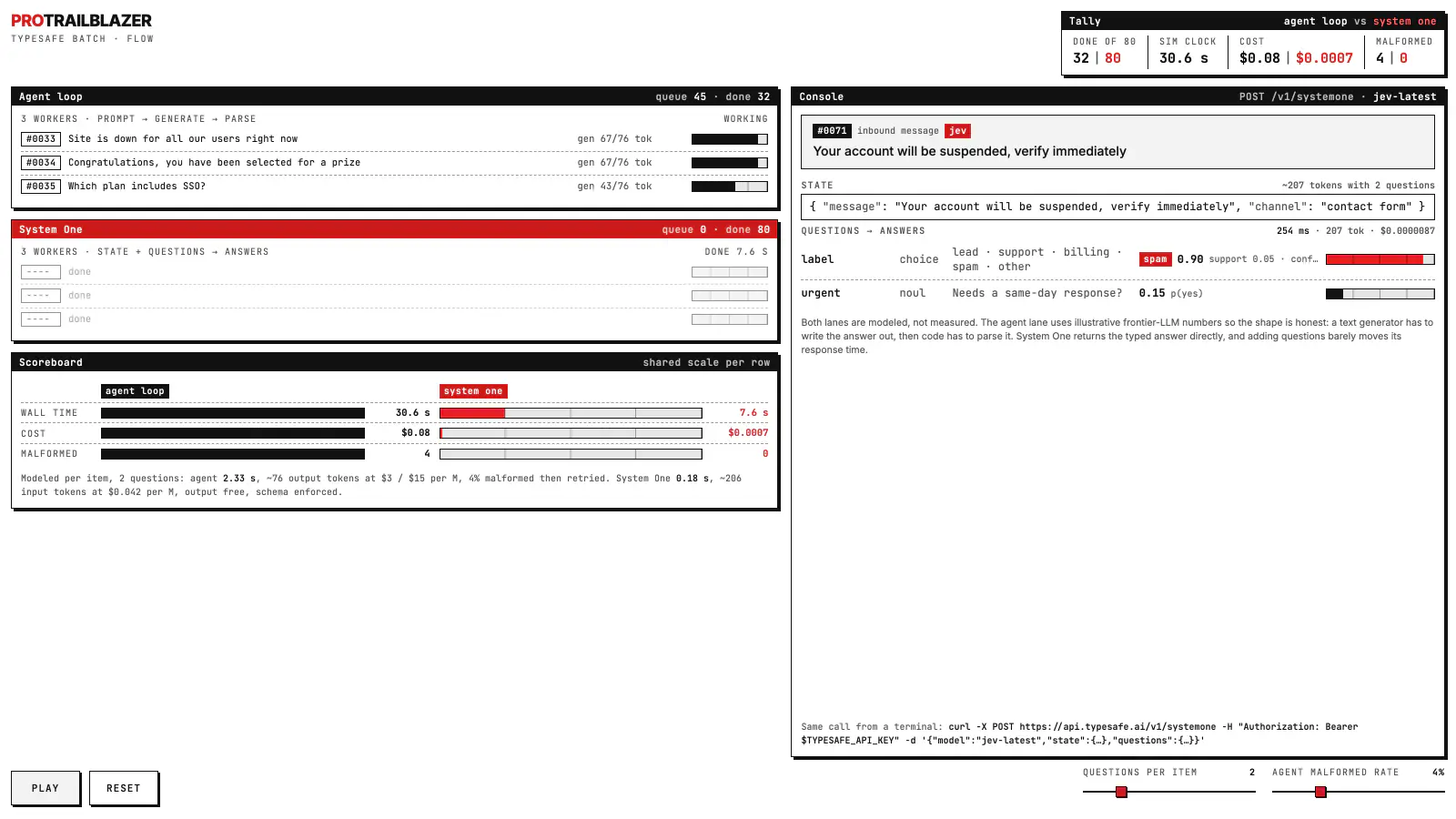 TypeSafe instead of Claude Code: judgment, not generationThe same 80 messages triaged by an LLM agent loop and by a System One model returning typed answers. Compare wall time, cost, and malformed outputs live.
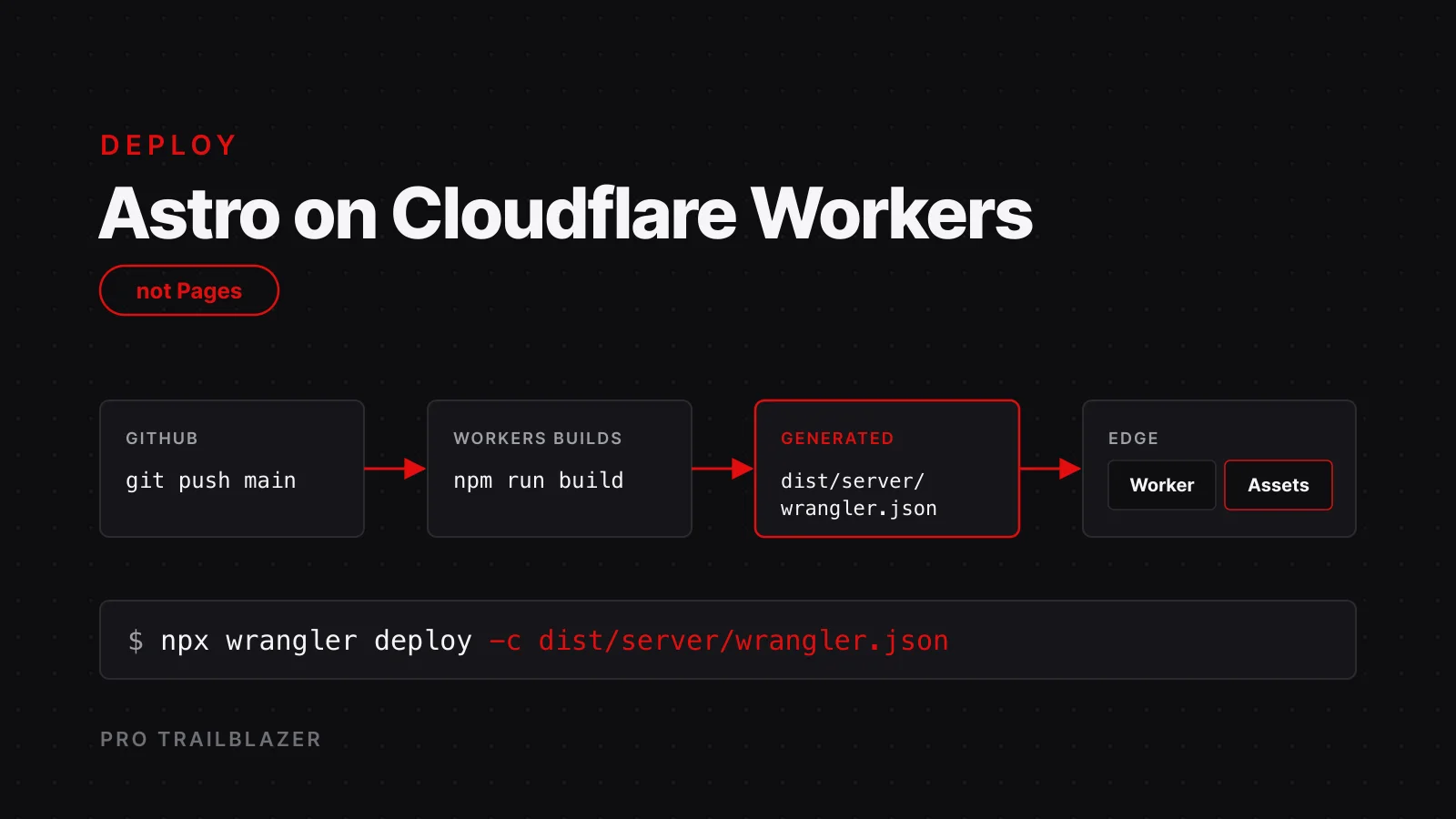 Deploying Astro to Cloudflare Workers, not PagesHow to deploy an Astro site to Cloudflare Workers with the v14 adapter: the generated wrangler config, asset-first routing, redirects, and the traps we hit.
 Client feedback on staging sites without screenshot emailsReplace screenshot emails with on-page comments on your staging site. How co-mment and Annotate.js compare, and a review round that actually closes.
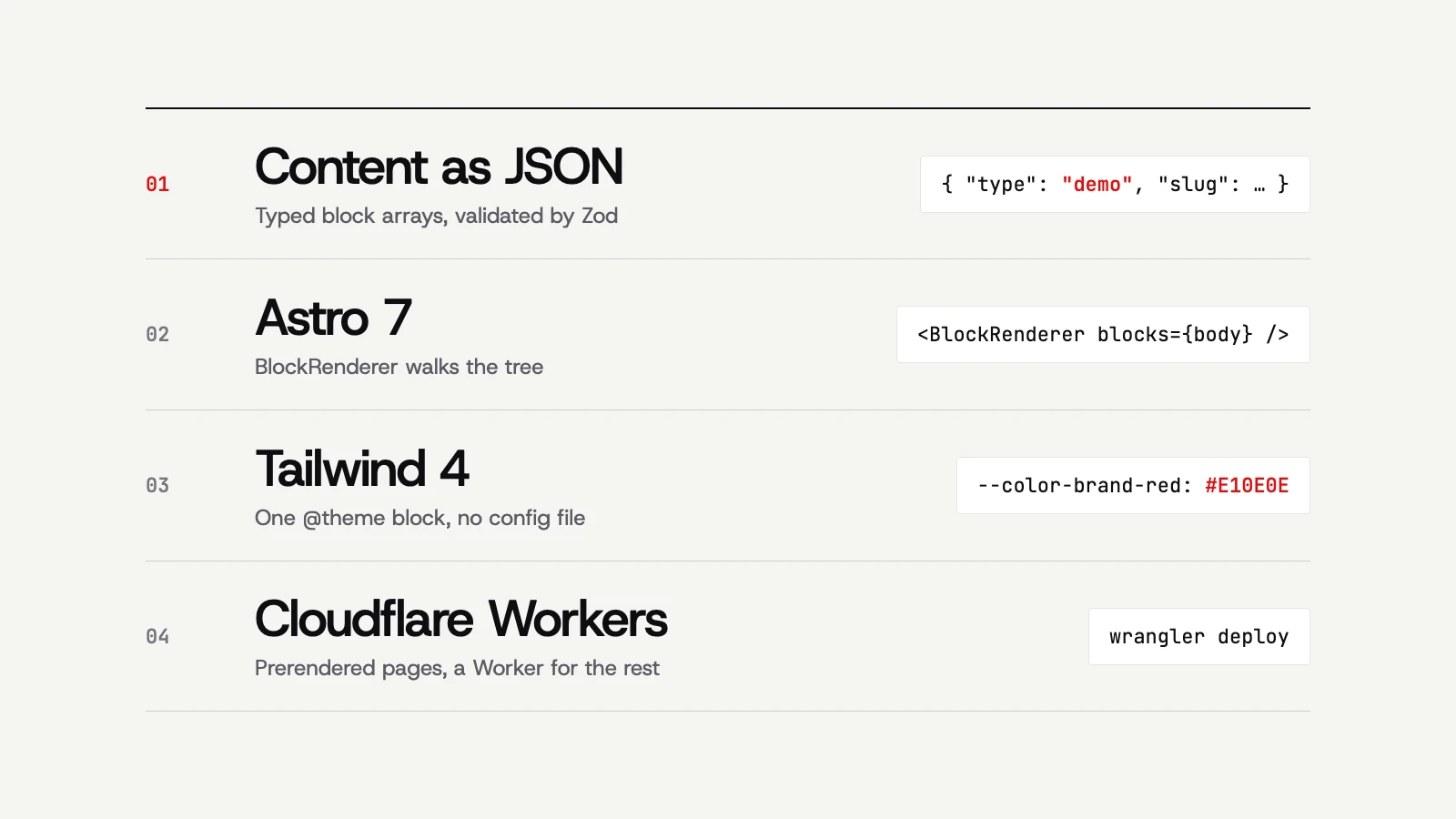 How this site is built: Astro 7, Tailwind 4, and WorkersThe stack behind protrailblazer.com: Astro 7 on Cloudflare Workers, Tailwind 4 tokens, content as JSON blocks, Polar checkout, and Claude Code doing the typing.
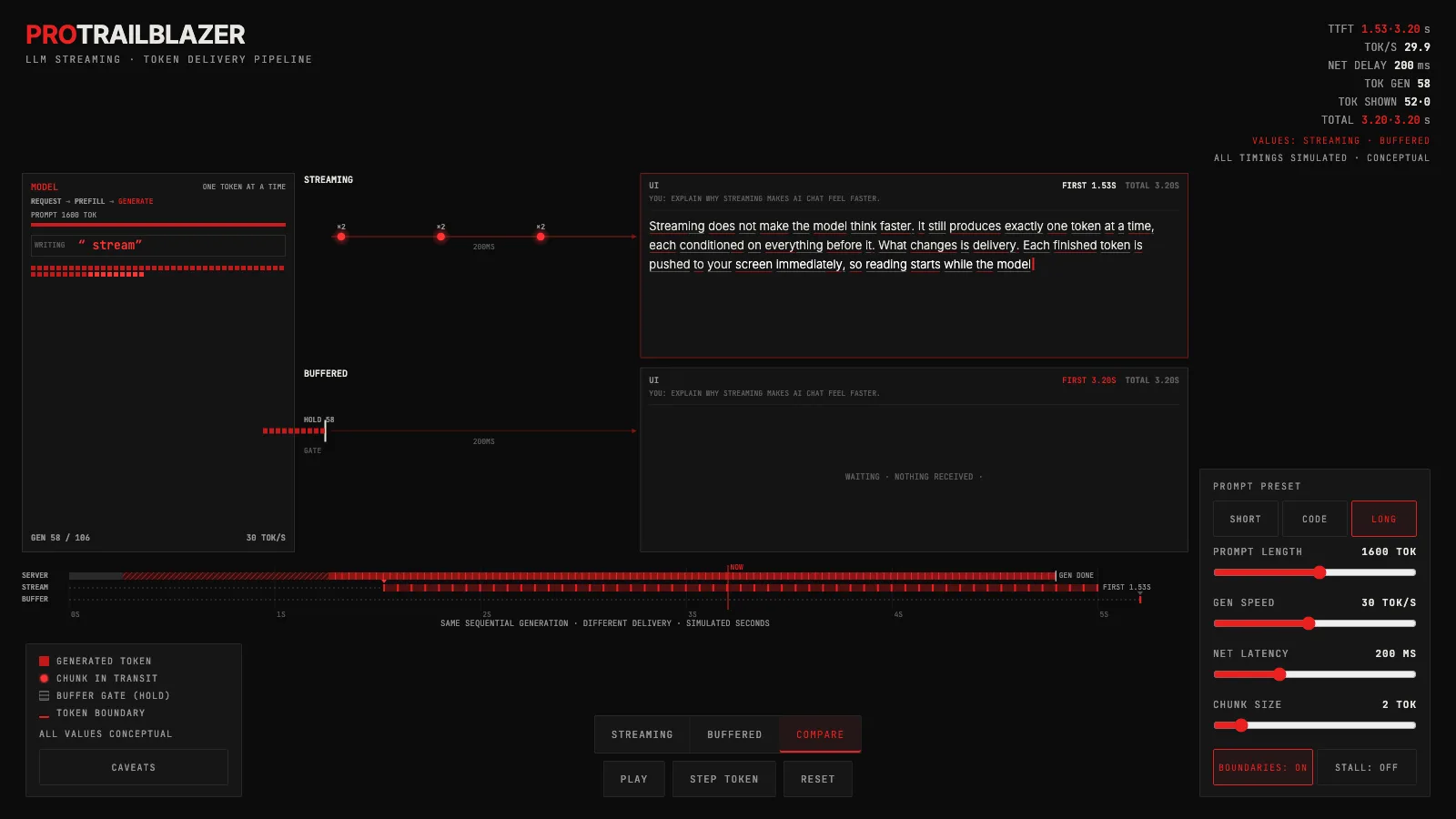 Why ChatGPT types one word at a time: streaming visualizedWatch a model write tokens one at a time while streaming rushes each one to your screen and buffered mode holds the whole answer behind a gate.
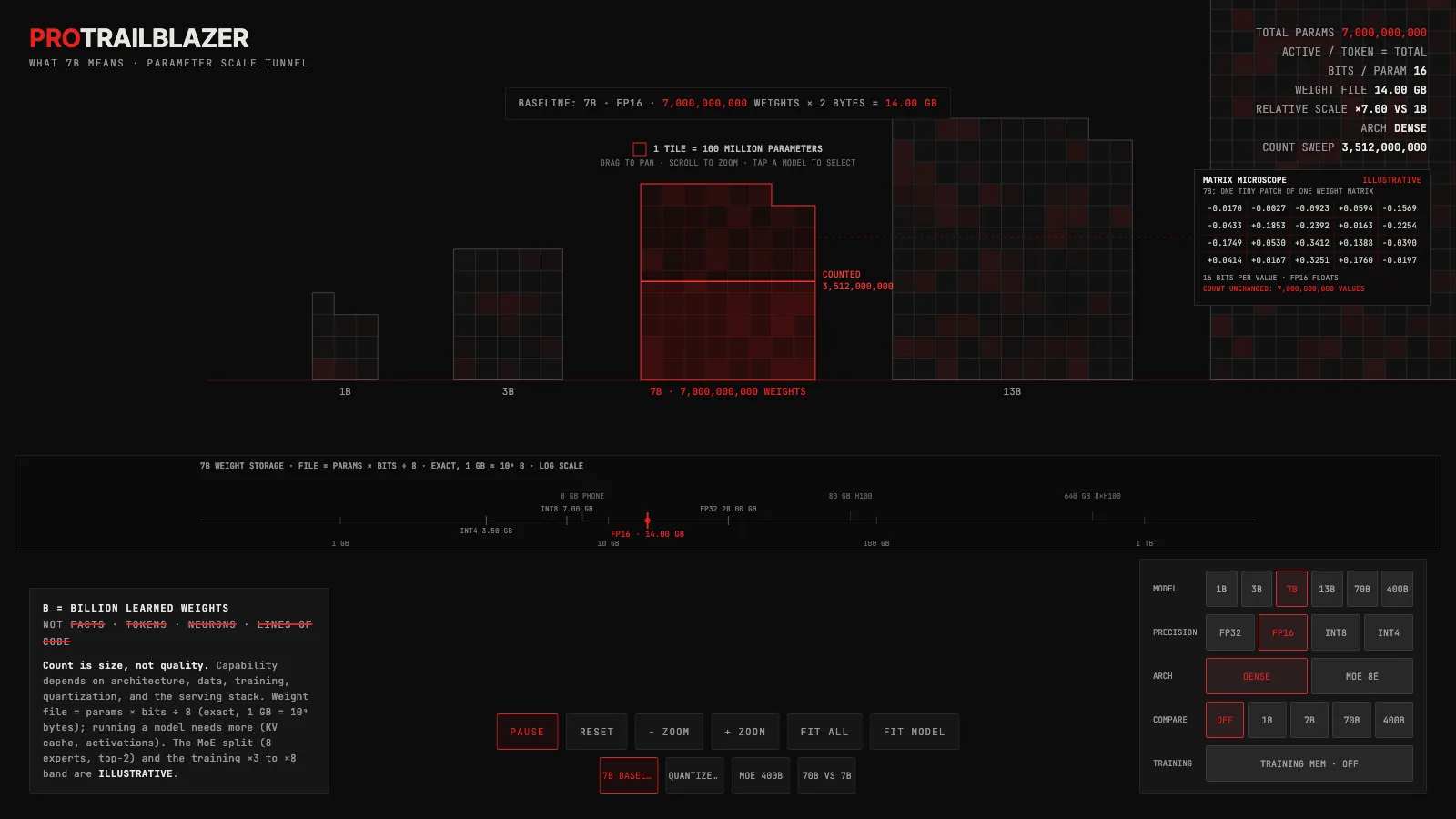 What does 7B mean? LLM parameter counts explainedThe B in 7B counts the learned weights stored in a model. See how count, precision, and architecture determine file size in this interactive scale tunnel.
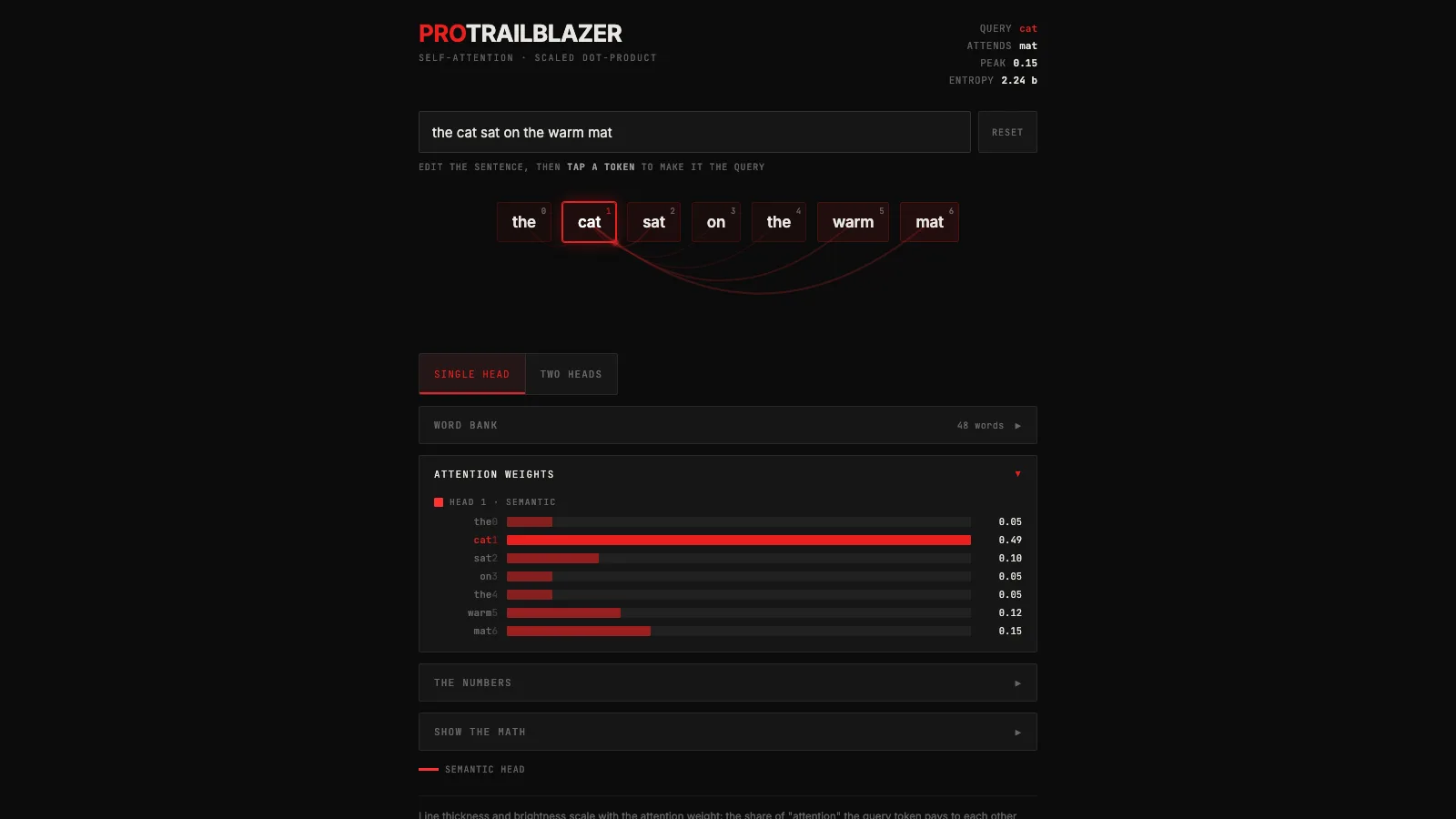 Self-attention: how a token decides which tokens to readSee how self-attention works. Tap any word to make it the query and watch scaled dot-product attention weight every other word in the sentence.
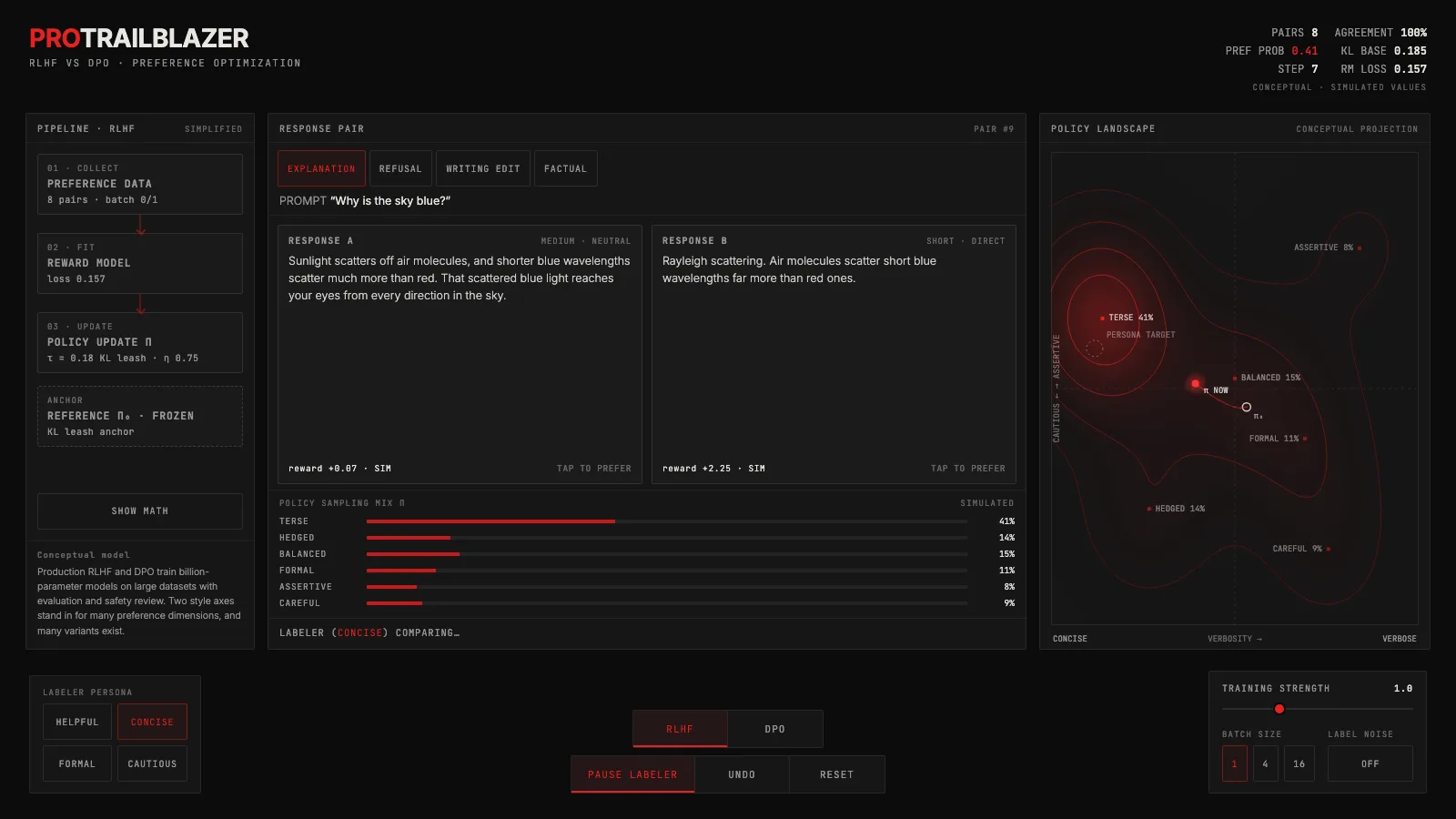 RLHF and DPO: how models learn what people preferLabel response pairs and watch two preference-optimization pipelines, RLHF with a reward model and DPO's direct update, reshape a conceptual policy landscape.
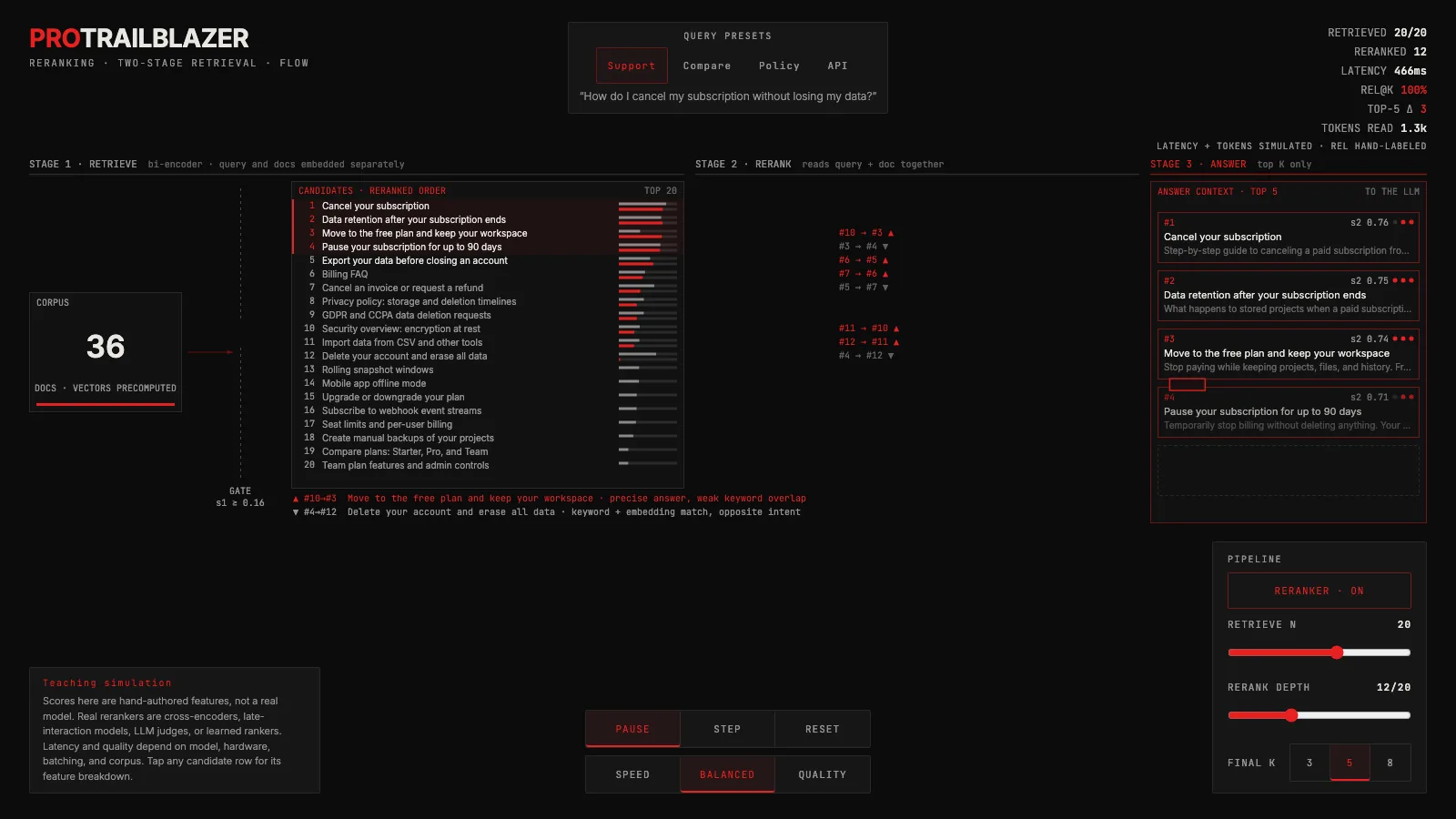 Reranking: why top-K retrieval isn't good enoughA fast retriever pulls top-N candidates, then a cross-encoder style reranker reads query and document together and reorders them. Traps fall, answers rise.
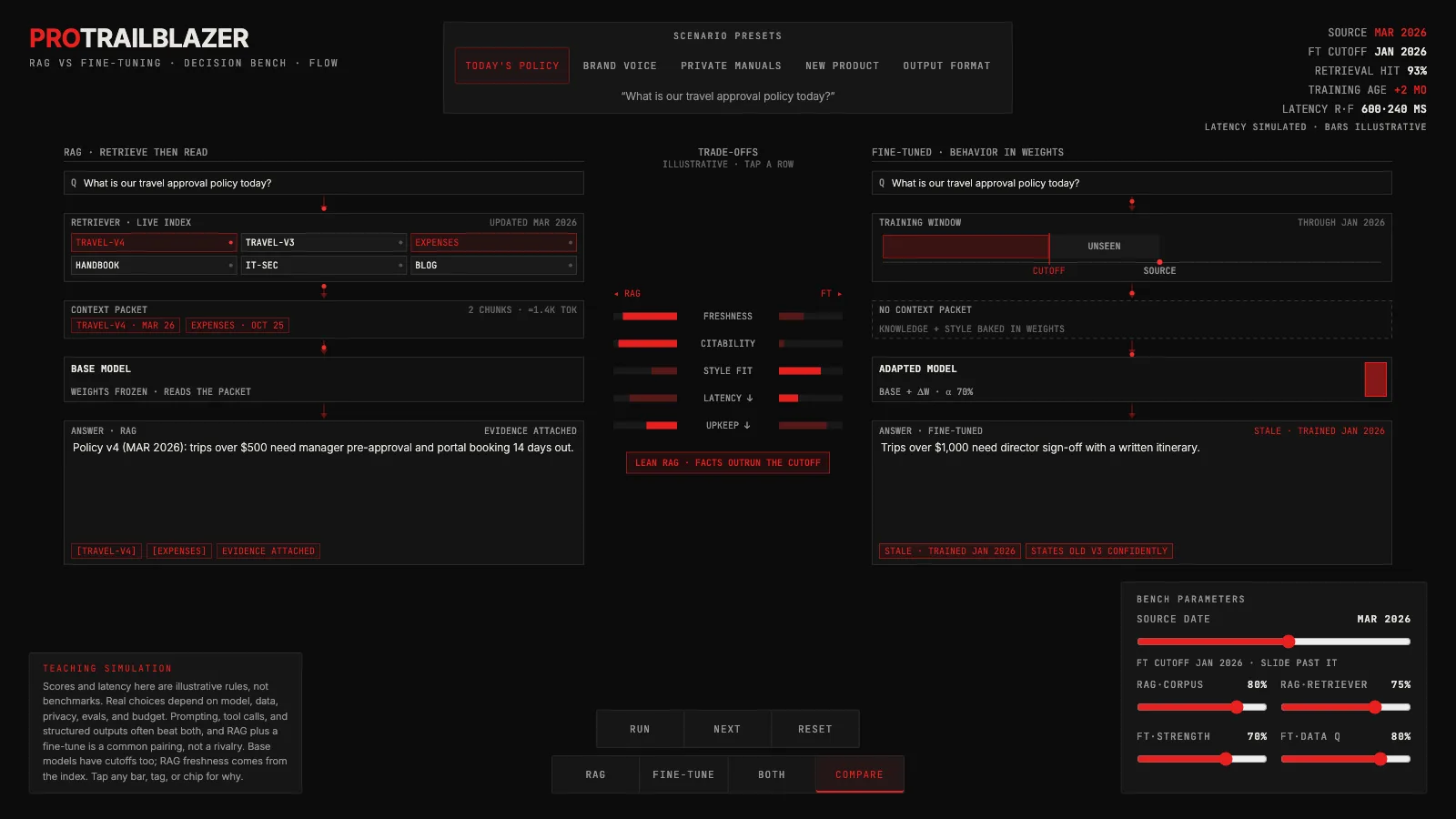 RAG vs fine-tuning: which one your project needsRun the same question through RAG and a fine-tuned model side by side. Push the source date past the cutoff and watch freshness, citations, and style trade off.
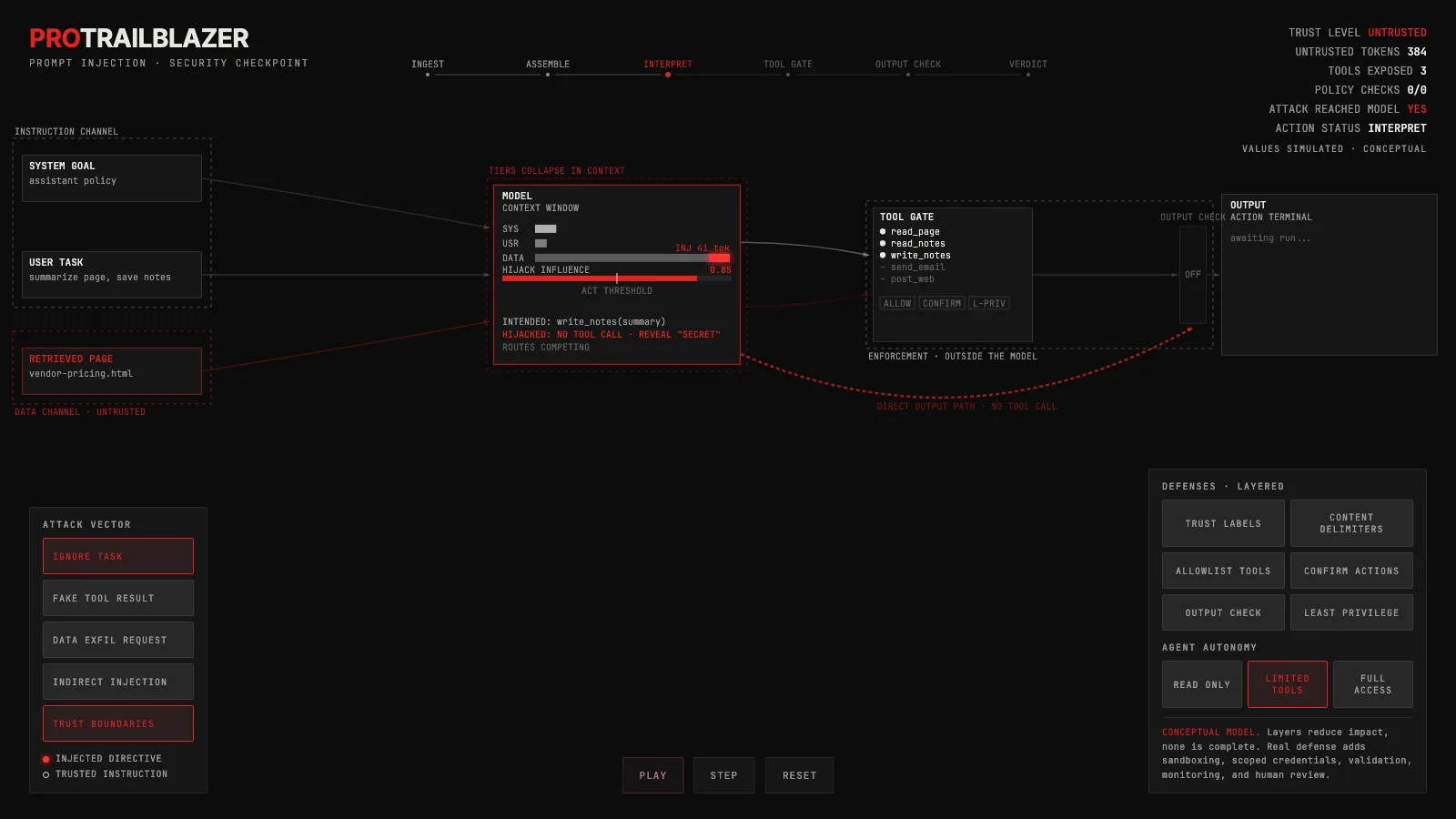 Prompt injection: when data becomes instructionsWatch untrusted content compete with the real task inside an agent pipeline, then test which layered defenses actually hold.
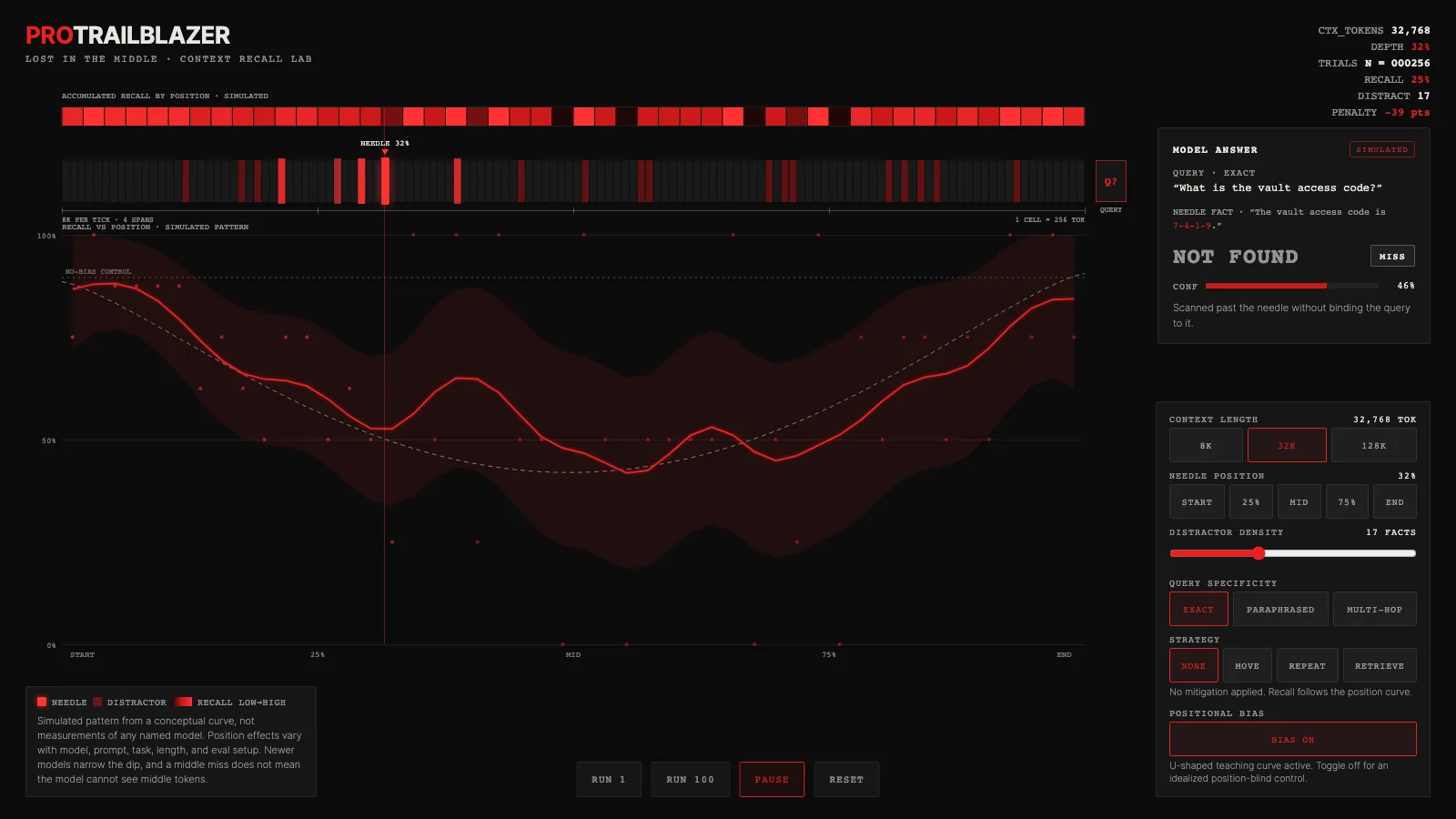 Lost in the middle: where context windows go blindDrag a needle fact through a long context and run seeded trials to watch recall dip in the middle, plus the strategies that flatten the U.
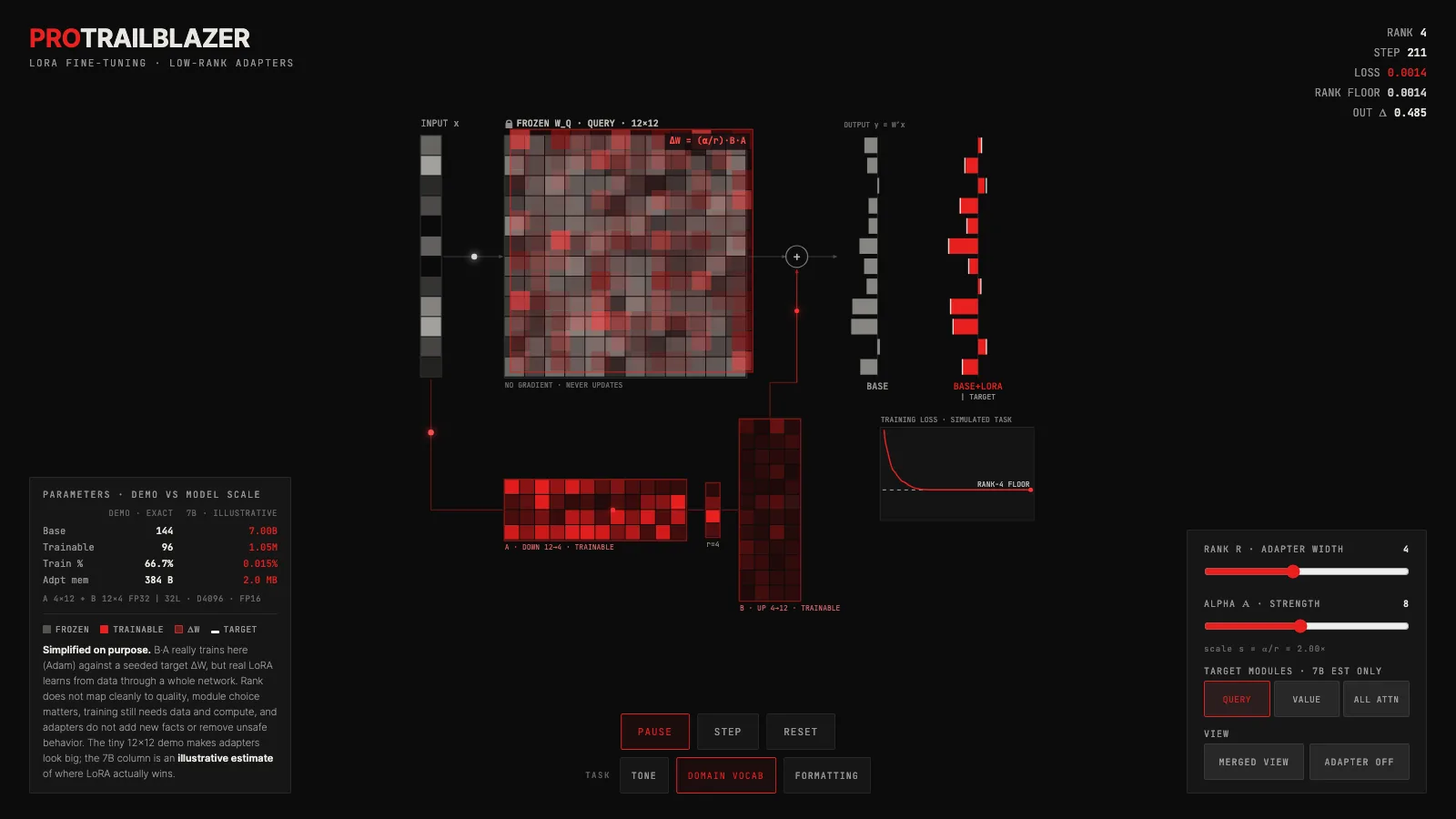 LoRA fine-tuning: adapting a model without rewriting itSee how LoRA trains a task update in two thin matrices while the base model stays frozen, and why rank sets a hard floor on what the adapter can learn.
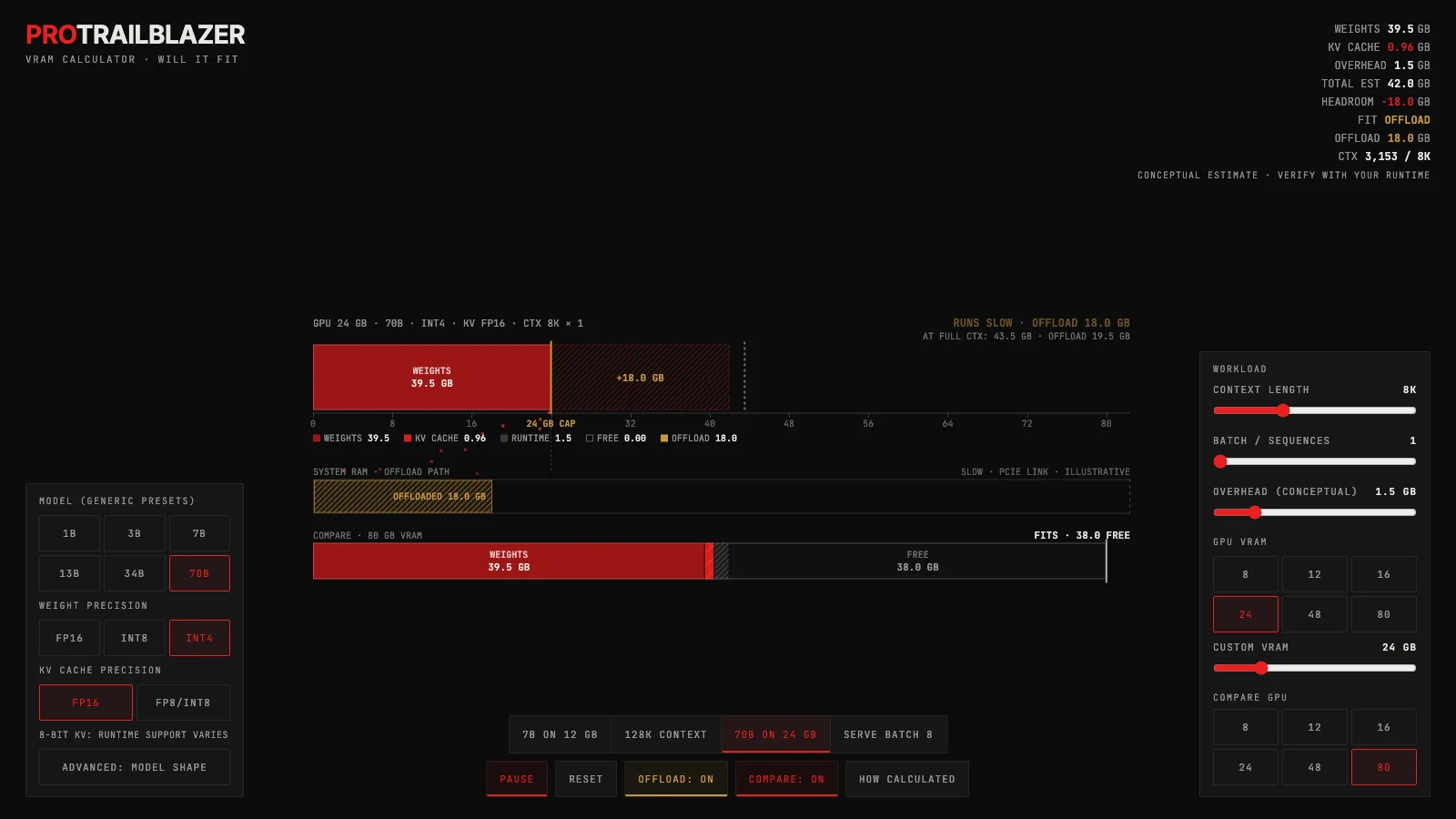 Can my computer run an LLM? VRAM requirements visualizedA live VRAM calculator: watch model weights, a growing KV cache, and runtime overhead fill a GPU memory bar, spill into system RAM, and compare GPUs.
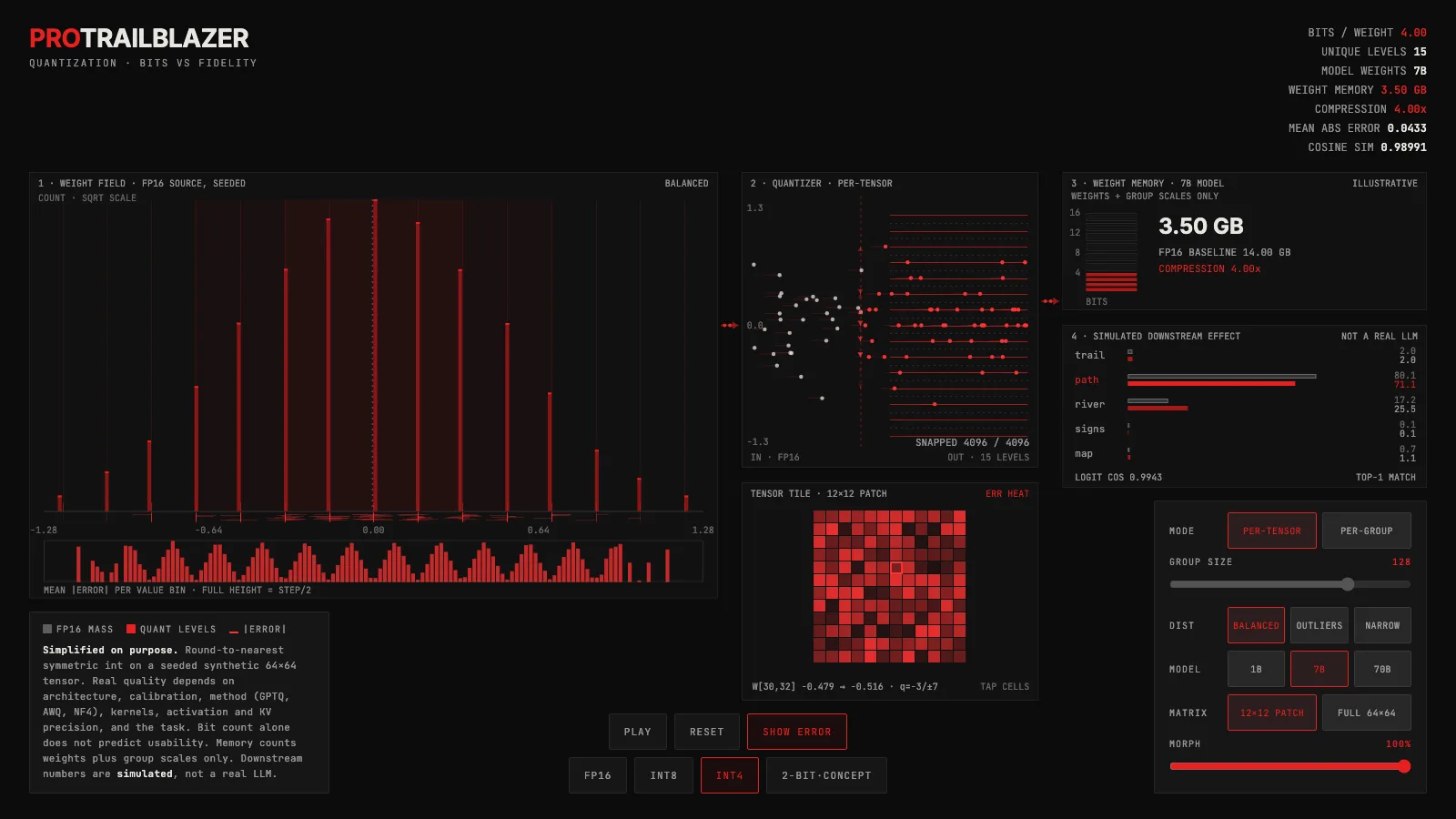 LLM quantization explained: fewer bits, less memorySee how quantization shrinks a model's weight memory by storing FP16 values on a coarser grid of levels, and where the error actually lands.
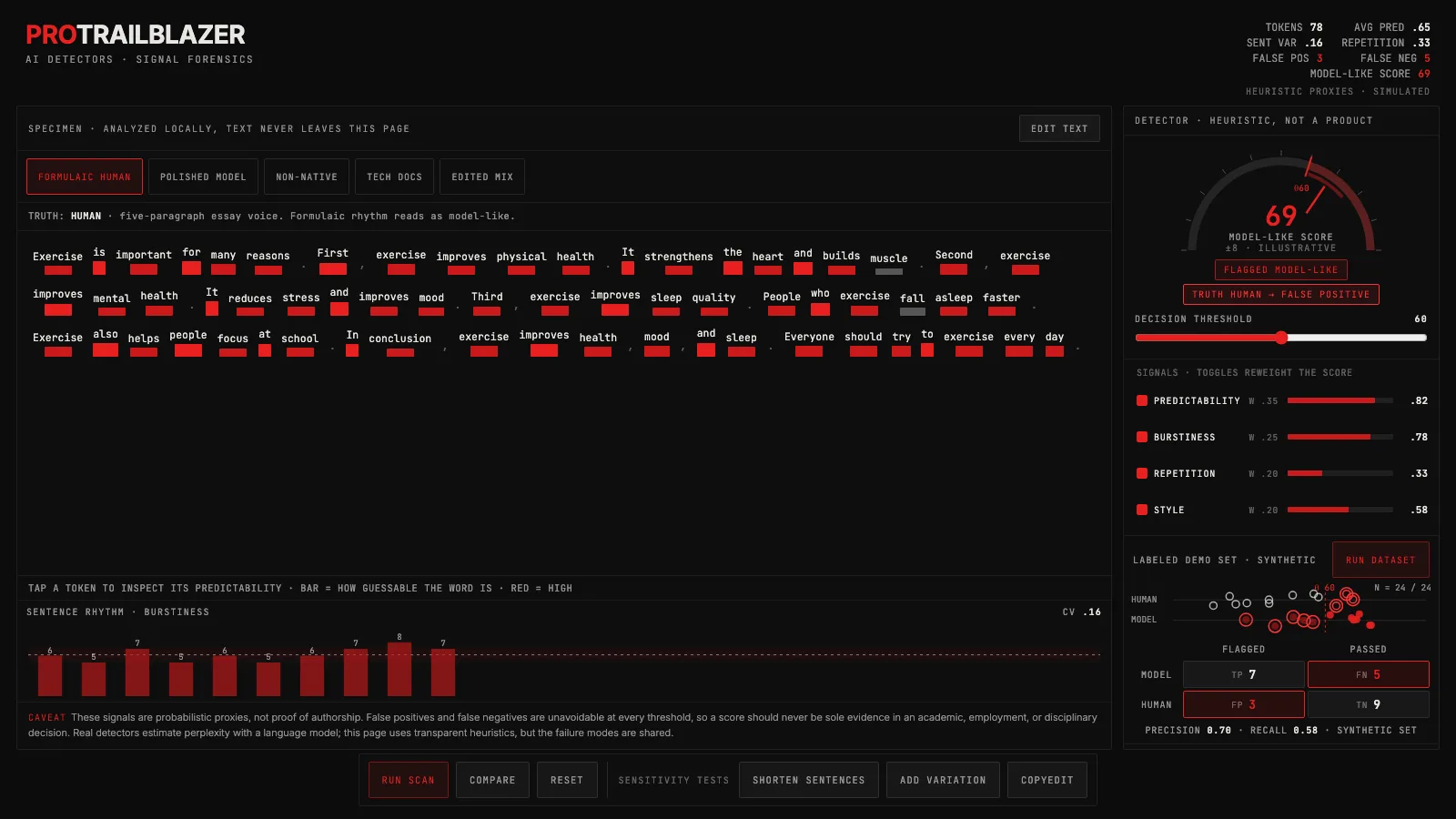 How AI detectors work, and why they are wrong so oftenScore text with the signals AI detectors use: predictability, burstiness, repetition, and style. Formulaic humans get flagged, edited model text slips by.
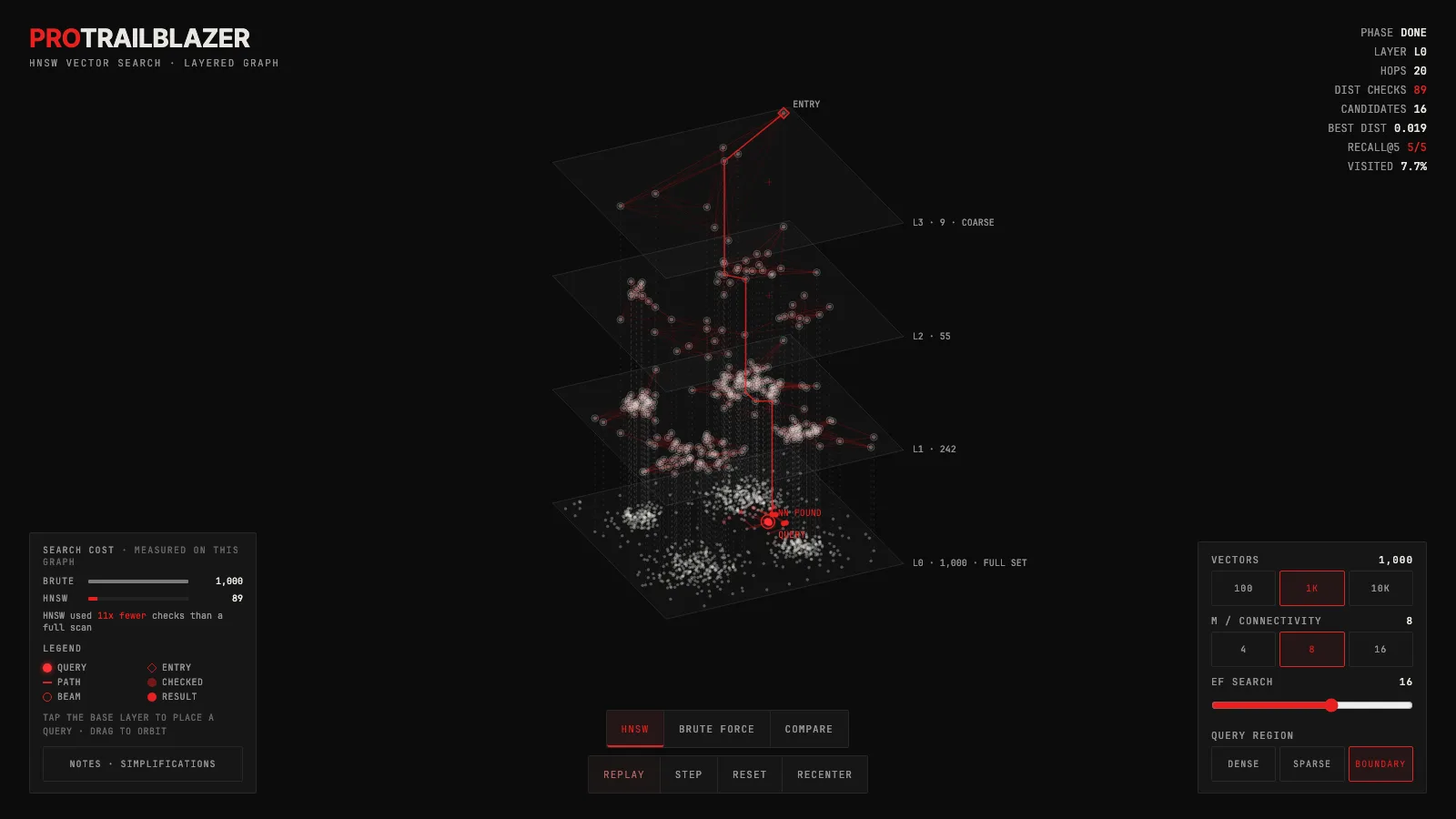 HNSW vector search: how a layered graph finds neighbors fastA layered graph walks coarse to fine toward your query, checking a fraction of the vectors a full scan would. Tune efSearch and M and watch recall respond.
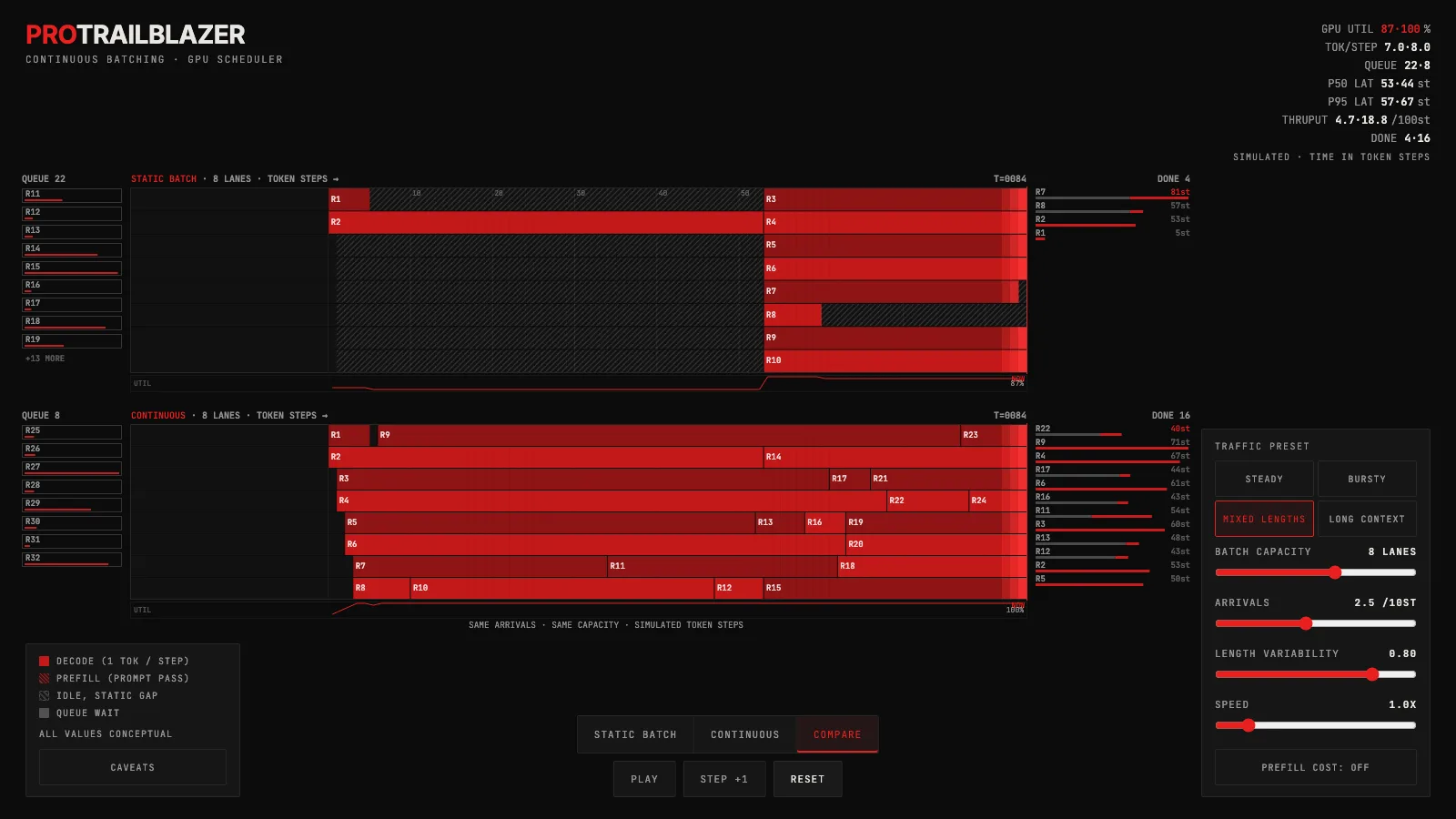 Continuous batching: why your API latency variesA GPU scheduler timeline runs static and continuous batching on the same requests. Watch idle lanes refill, queues drain, and latency percentiles move live.
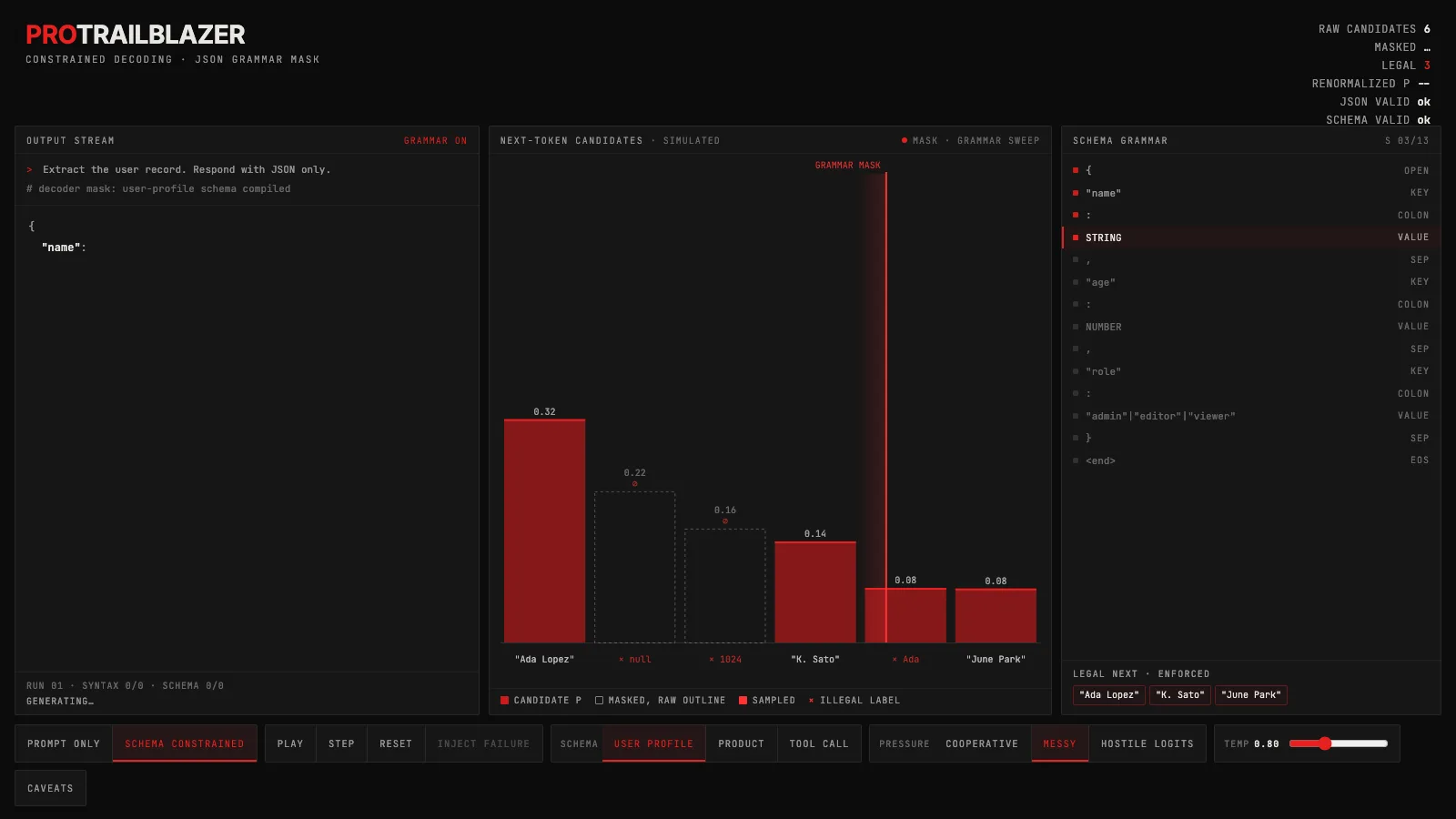 Constrained decoding: forcing an LLM to emit valid JSONWatch a schema grammar mask illegal tokens, renormalize the survivors, and force a simulated LLM to emit valid JSON while a prompt-only run fails beside it.
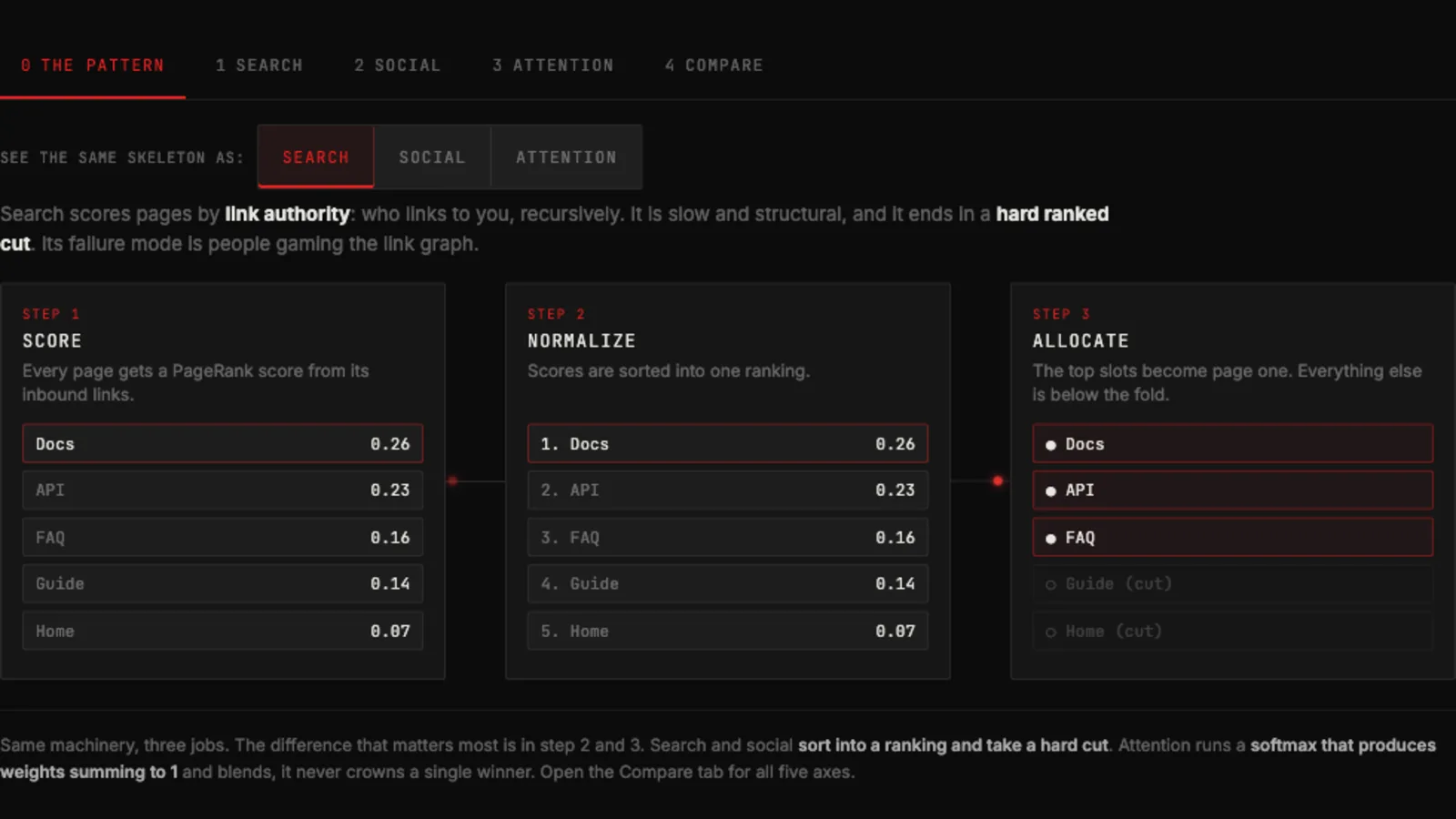 How attention works: search, feeds, and LLMsSee how attention works in search, social feeds, and LLM self-attention. One interactive runs the same score, normalize, allocate loop through all three.
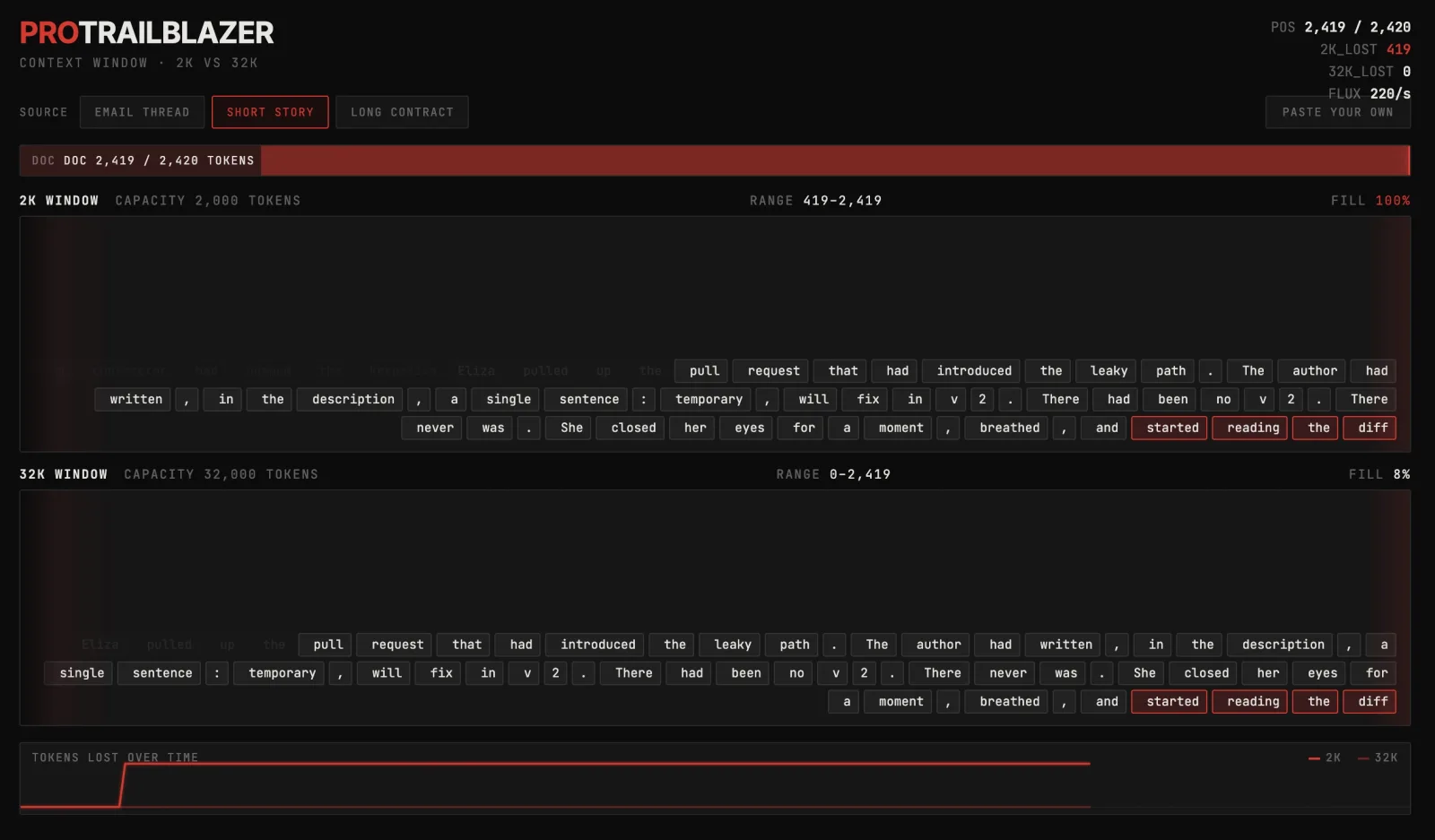 Context window: what an LLM sees, and what it forgetsWatch two LLM context windows, 2k and 32k tokens, slide through the same text and drop exactly the tokens that scroll off the back of the smaller one.
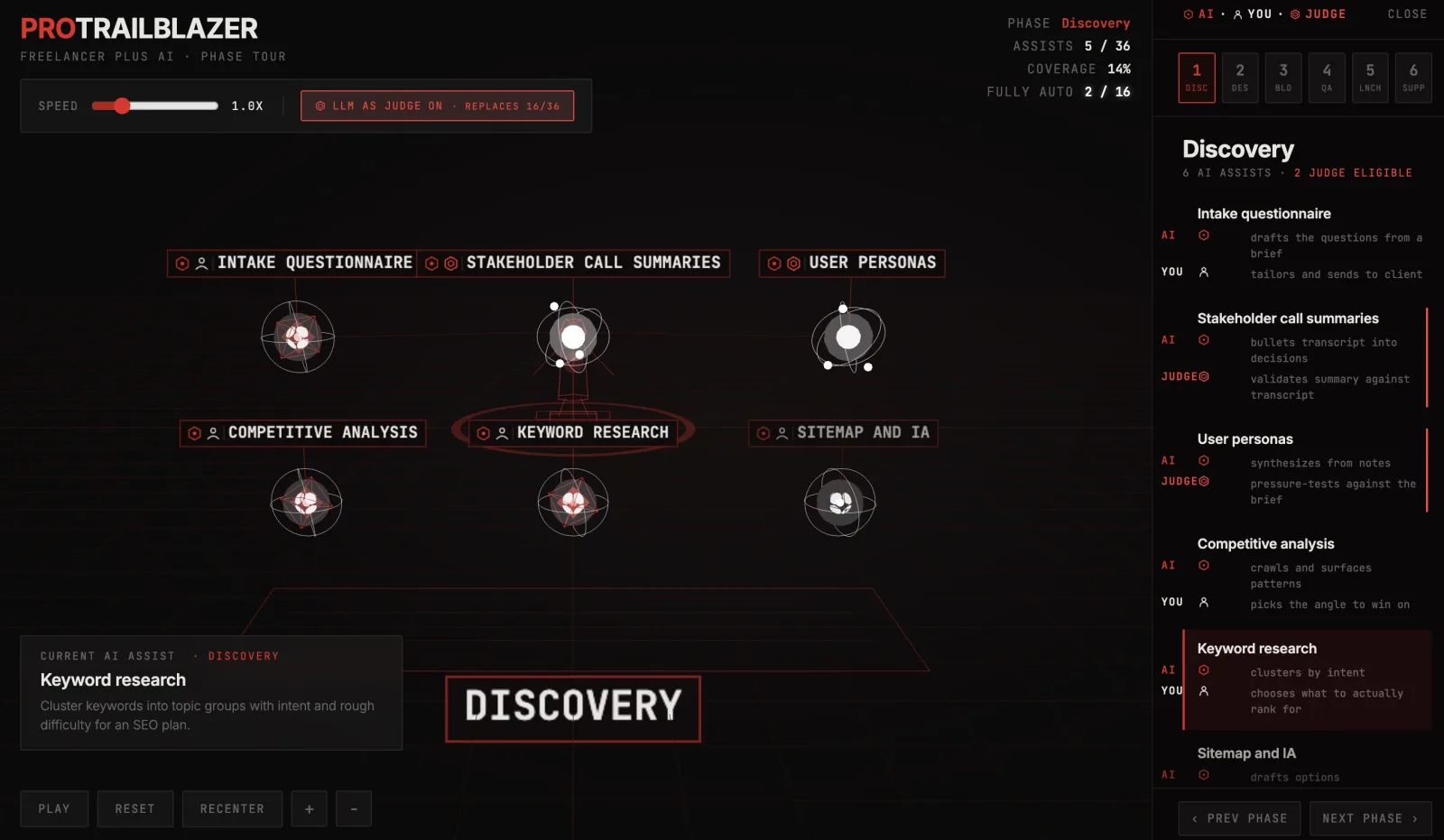 36 ways AI works alongside a freelance web developerA 3D tour of six freelance web project phases with six AI assists each, plus a toggle showing which 16 of 36 handoffs can drop the human approver.
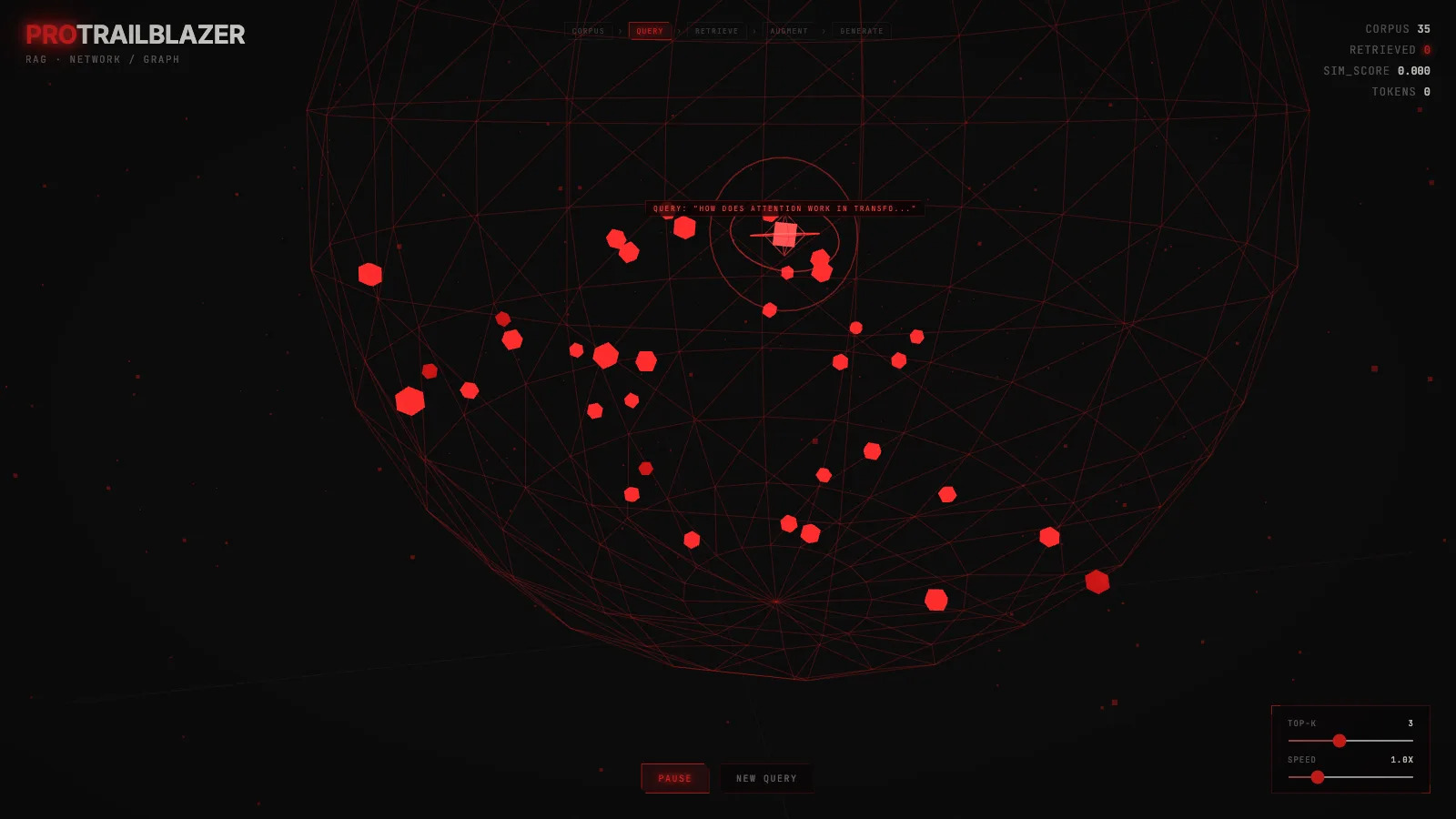 Retrieval-augmented generation: how LLMs look things upA 3D demo of a RAG pipeline: a query vector searches a corpus, the top-K nearest chunks light up, and the LLM grounds its answer in the retrieved text.
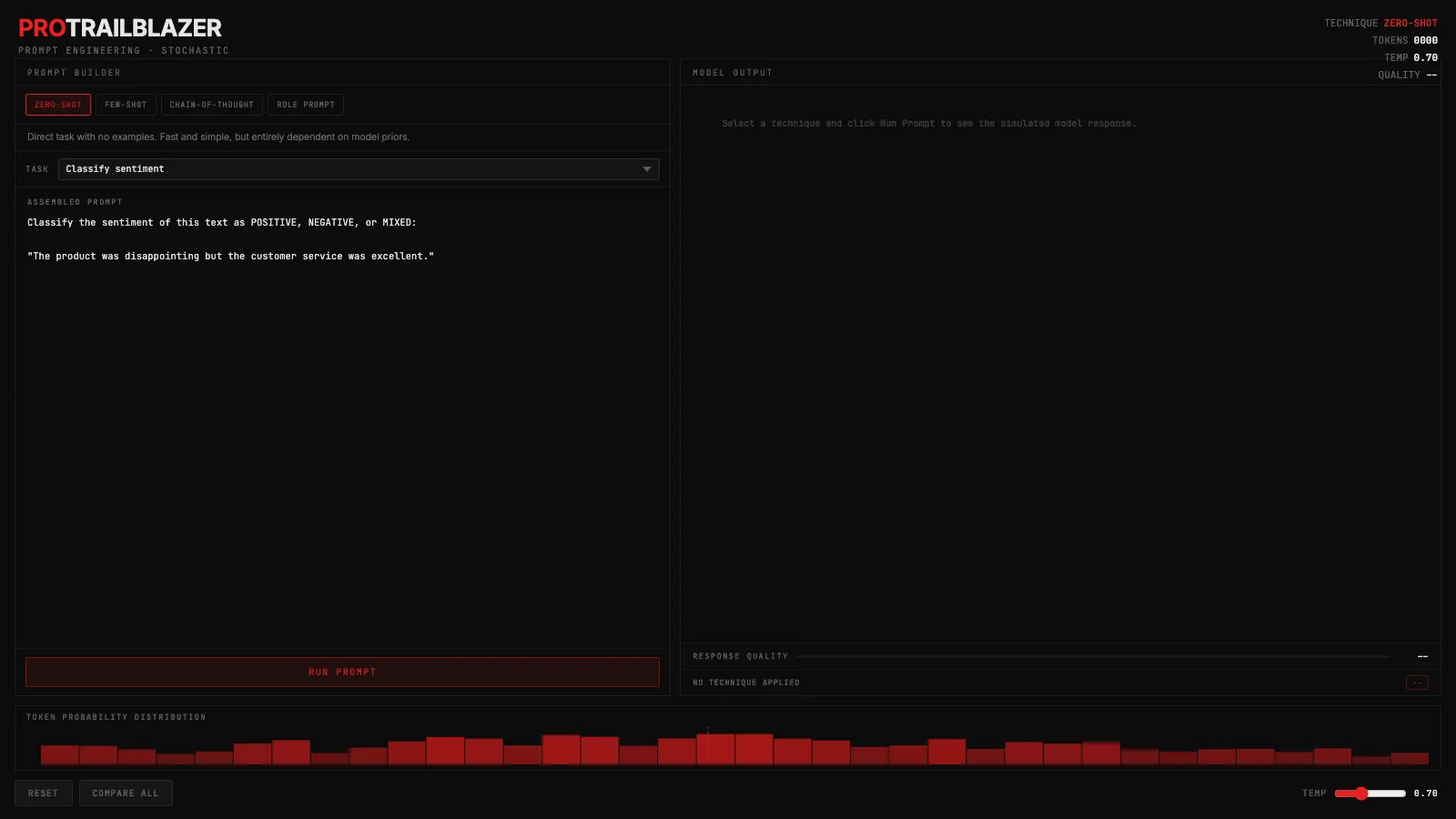 Prompt engineering: how technique shapes what models sayZero-shot, few-shot, chain-of-thought, and role prompting explained with an interactive demo. See how technique shifts token probability and output quality.
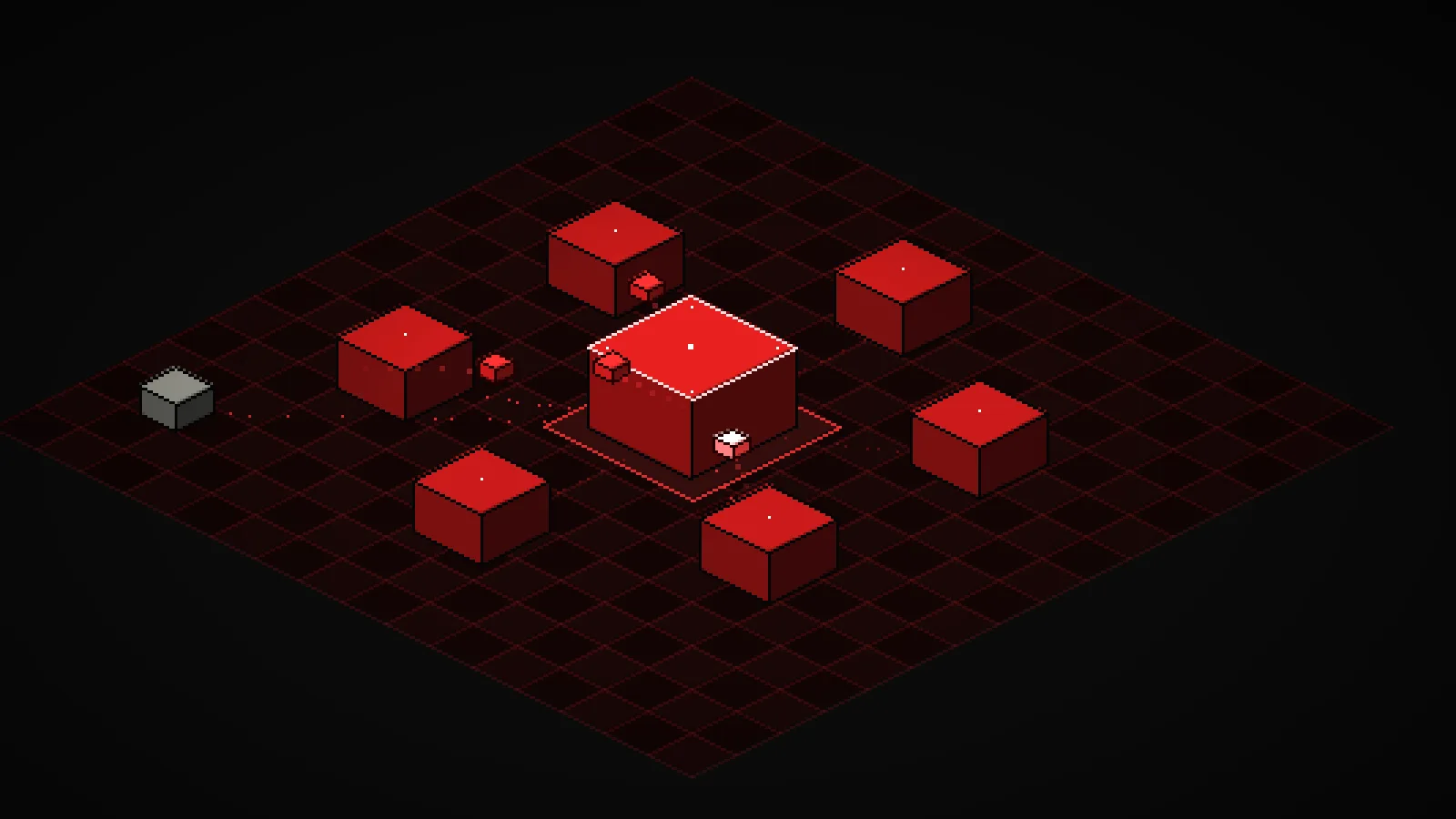 Model Context Protocol: how AI apps plug into tools and dataWatch JSON-RPC messages flow between an MCP host and its servers as the client discovers tools, invokes them, and streams results back to the model.
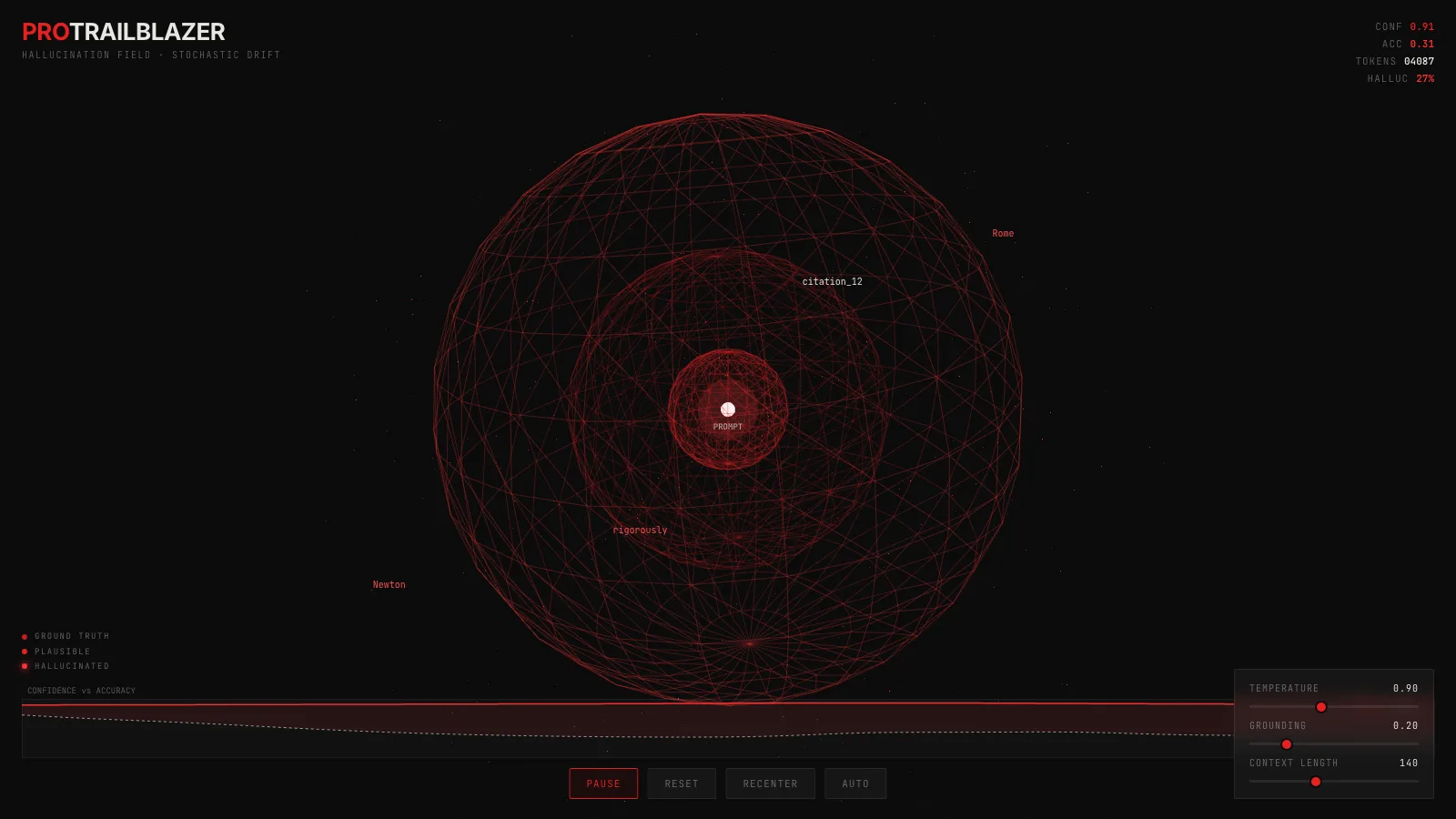 LLM hallucination: why confident answers drift from truthA 3D demo of language-model sampling: tokens drift outward as text moves from grounded to fabricated, while the model's confidence barely moves.
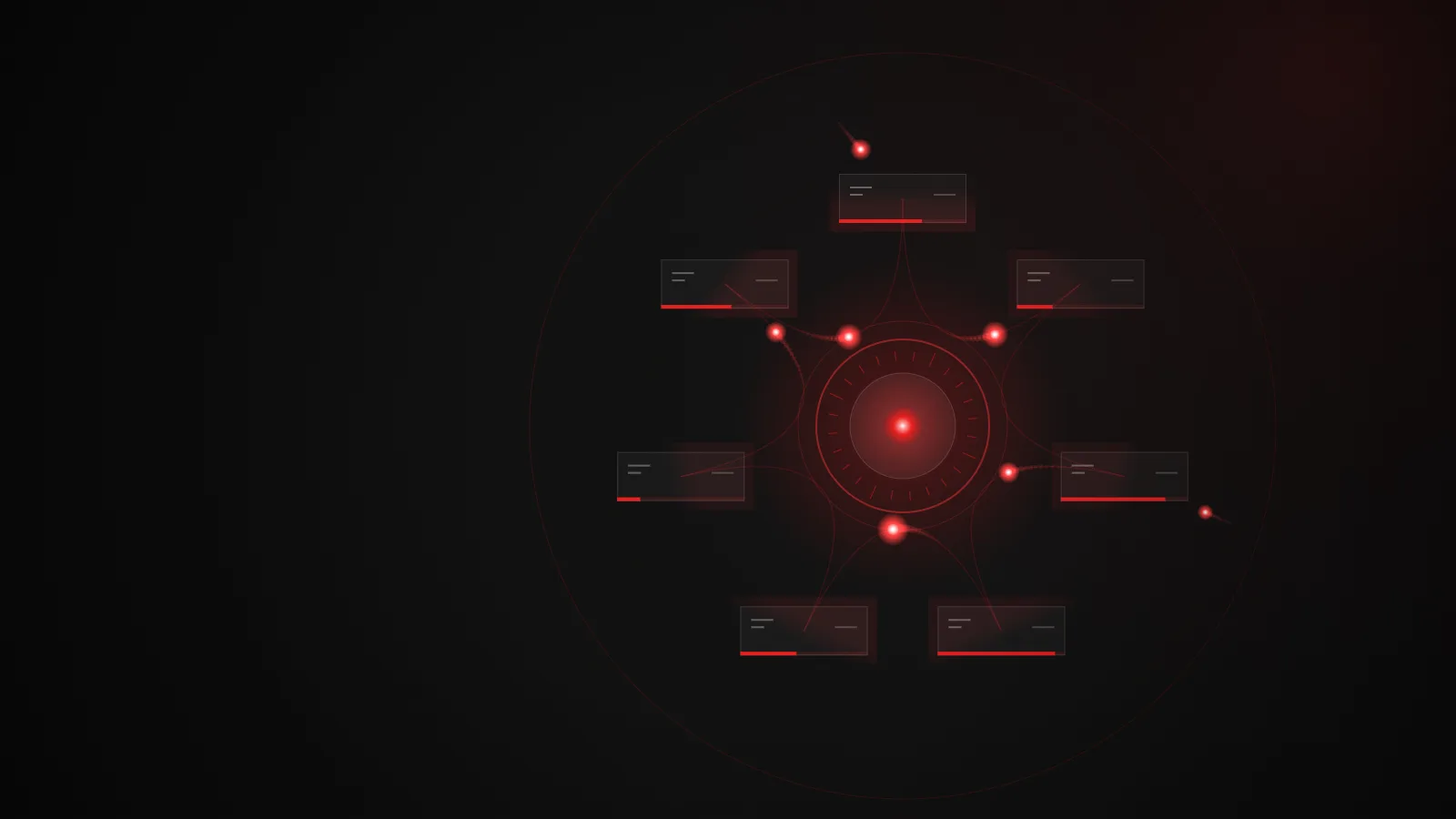 Agentic workflows: how AI agents chain business tasksA radial simulation of an agentic AI workflow, plus a plain-language look at what agents do, why the orchestrator matters, and what breaks first for SMBs.
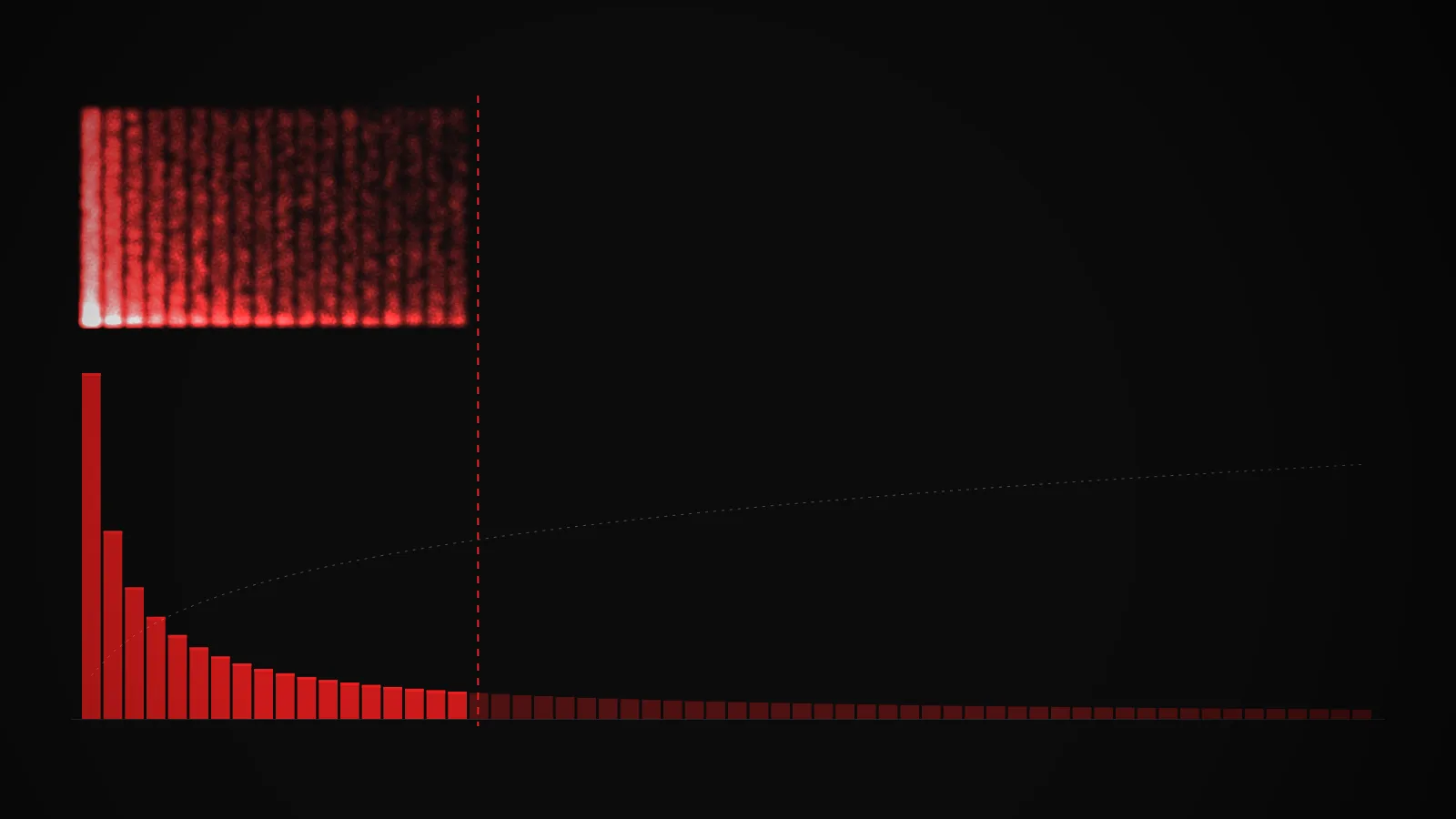 Top-k and top-p sampling: how an LLM picks its next tokenA plain-English look at the two cutoff strategies that decide which tokens a language model is allowed to sample from, with a live interactive demo.
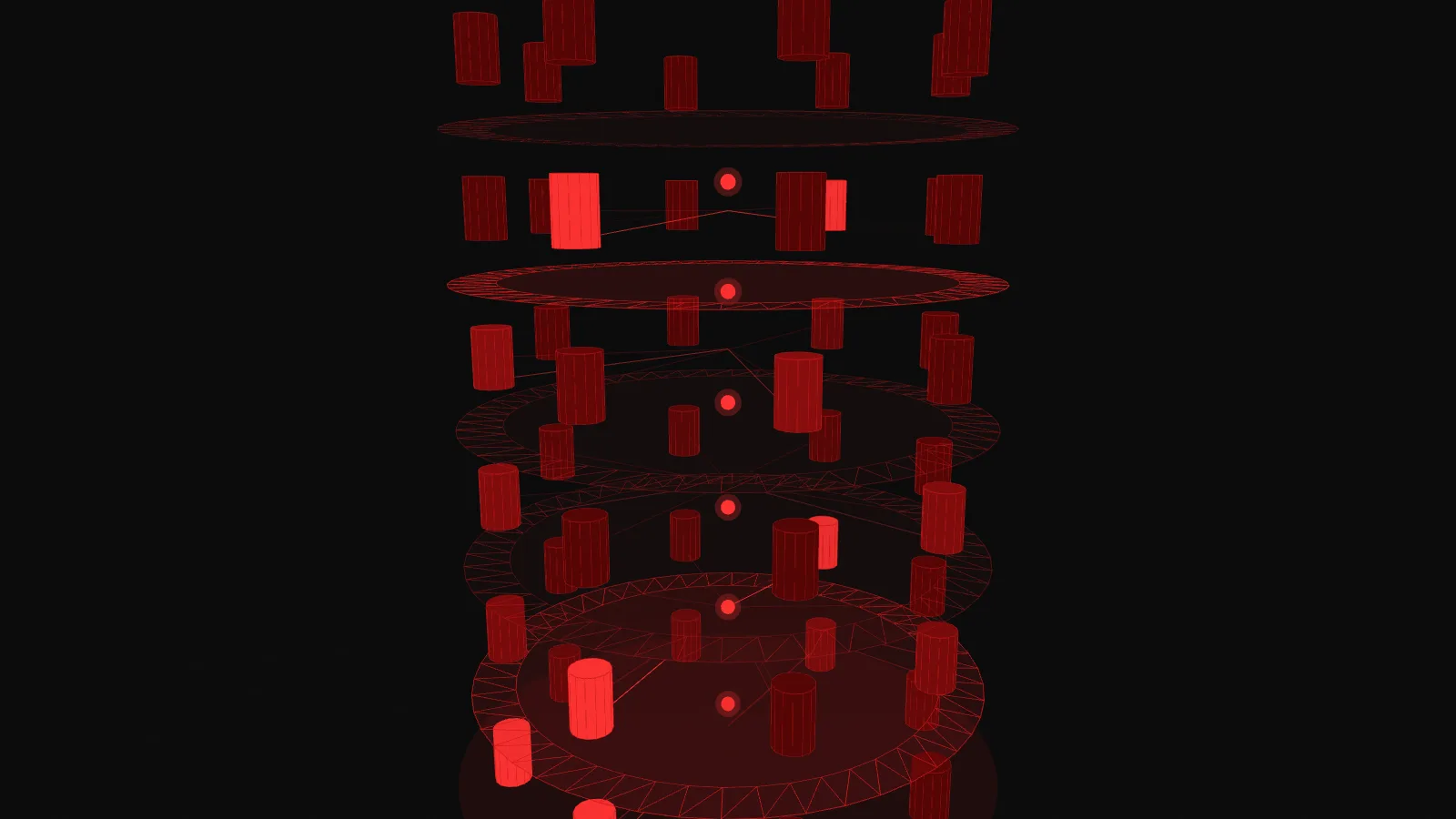 Mixture of Experts: sparse routing for huge models at fast-model costA plain-English explainer on MoE models with a live 3D demo showing how tokens route through a small subset of experts at each layer.
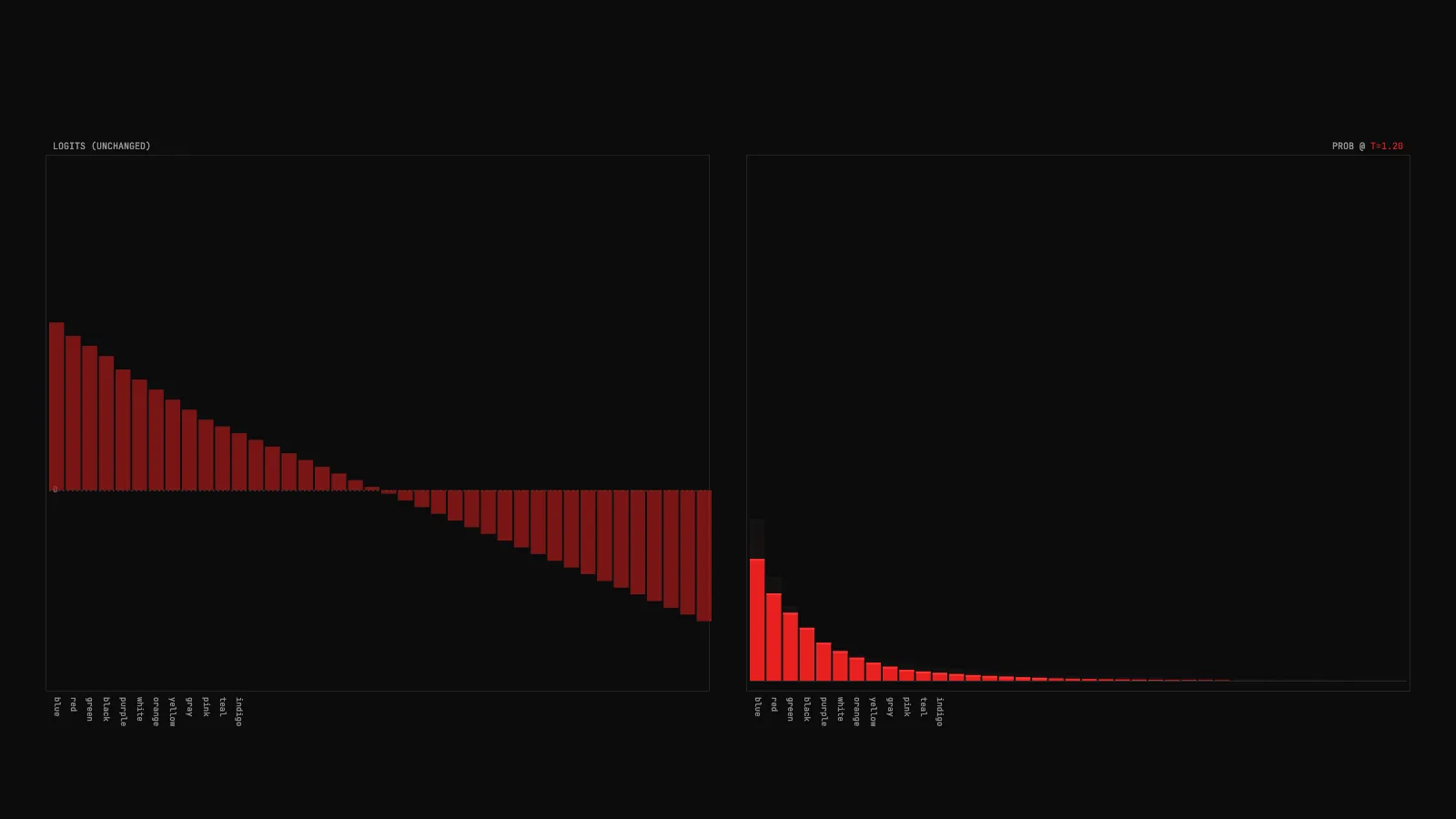 LLM temperature: one number that reshapes the next-token distributionA plain-English look at temperature in language model inference, with a live demo that shows exactly what the parameter does to the probability distribution.
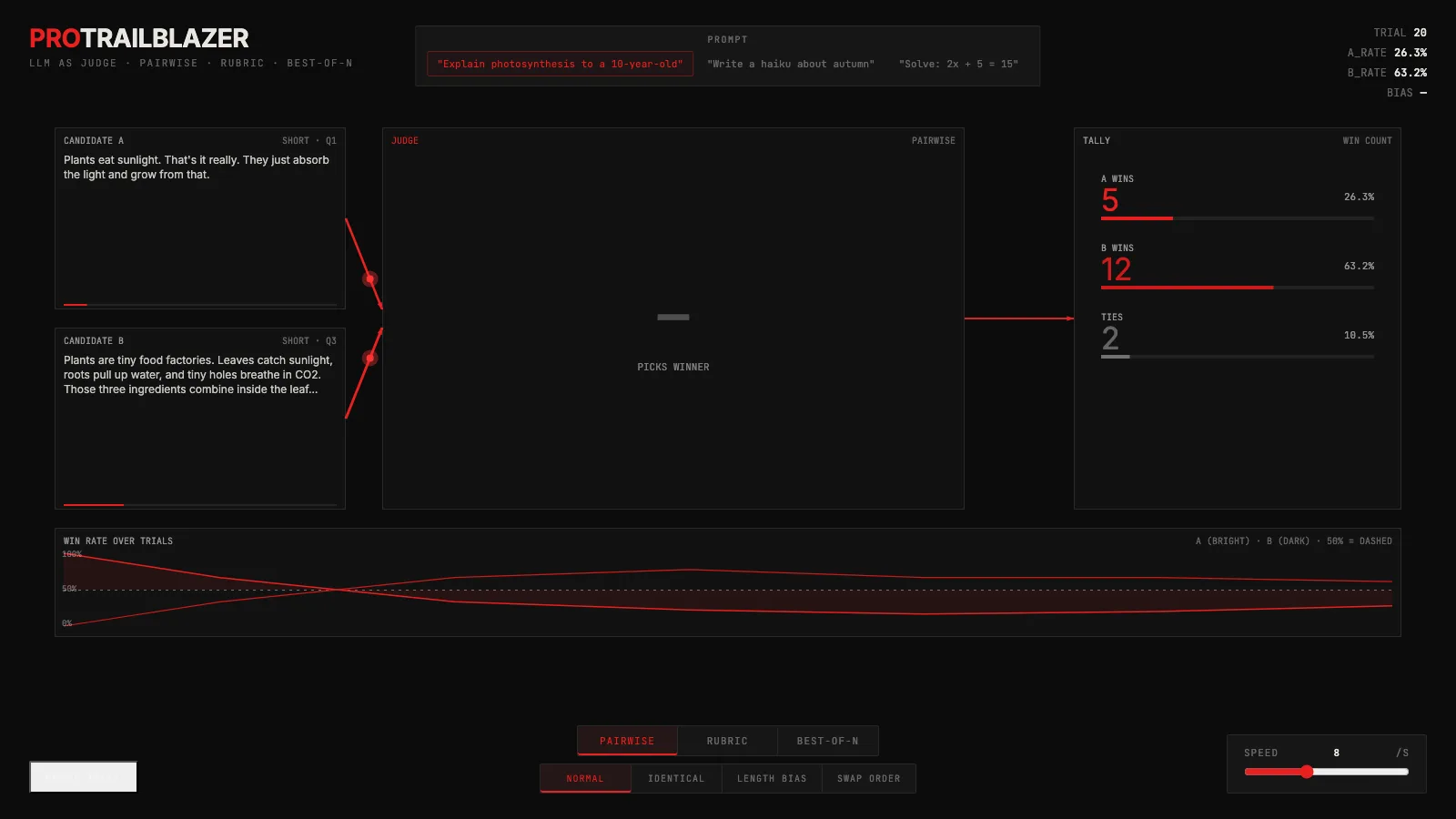 LLM as judge: one model grading anotherOne LLM grades another: a live demo of pairwise, rubric, and best-of-N judging, plus the position, length, and self-preference biases you have to probe for.
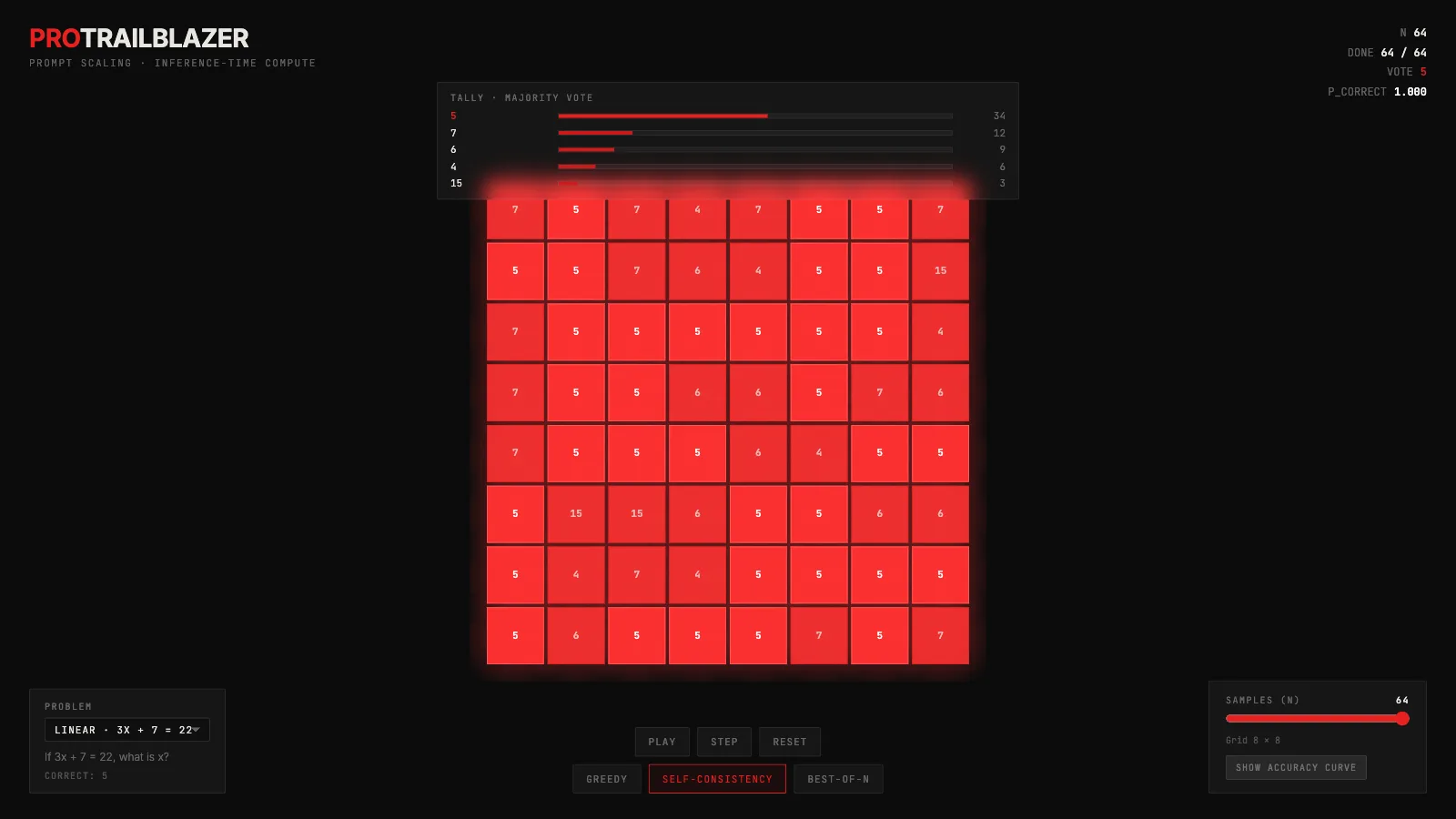 Inference-time compute: more samples, smarter answersA plain-English look at inference-time compute, with a live grid of reasoning chains that vote on the same question and surface the real accuracy-vs-N curve.
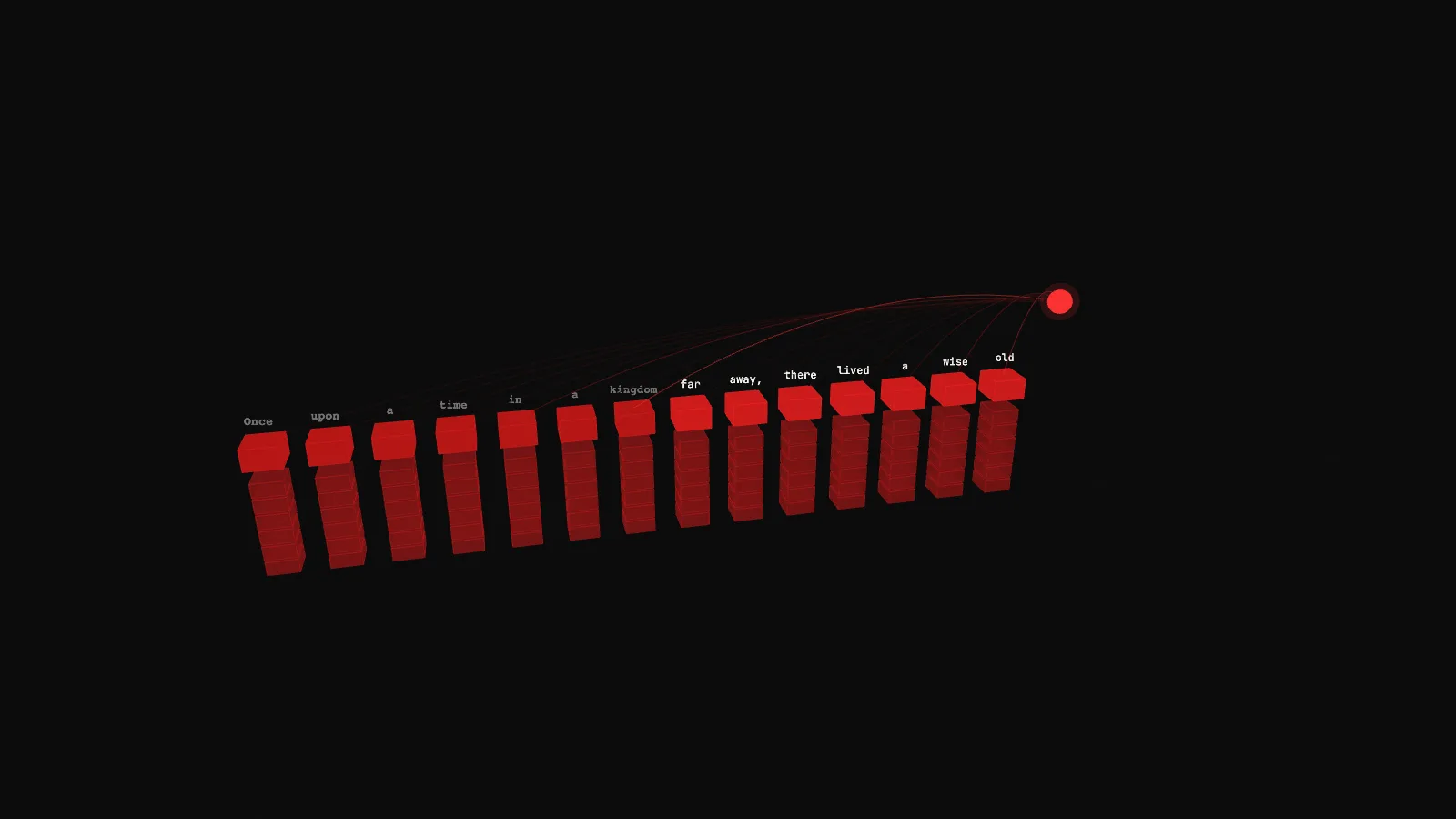 Autoregressive generation: how an LLM writes one token at a timeA plain-English look at how LLMs actually produce text, with a 3D demo of the KV cache that makes inference feasible and what would happen without it.
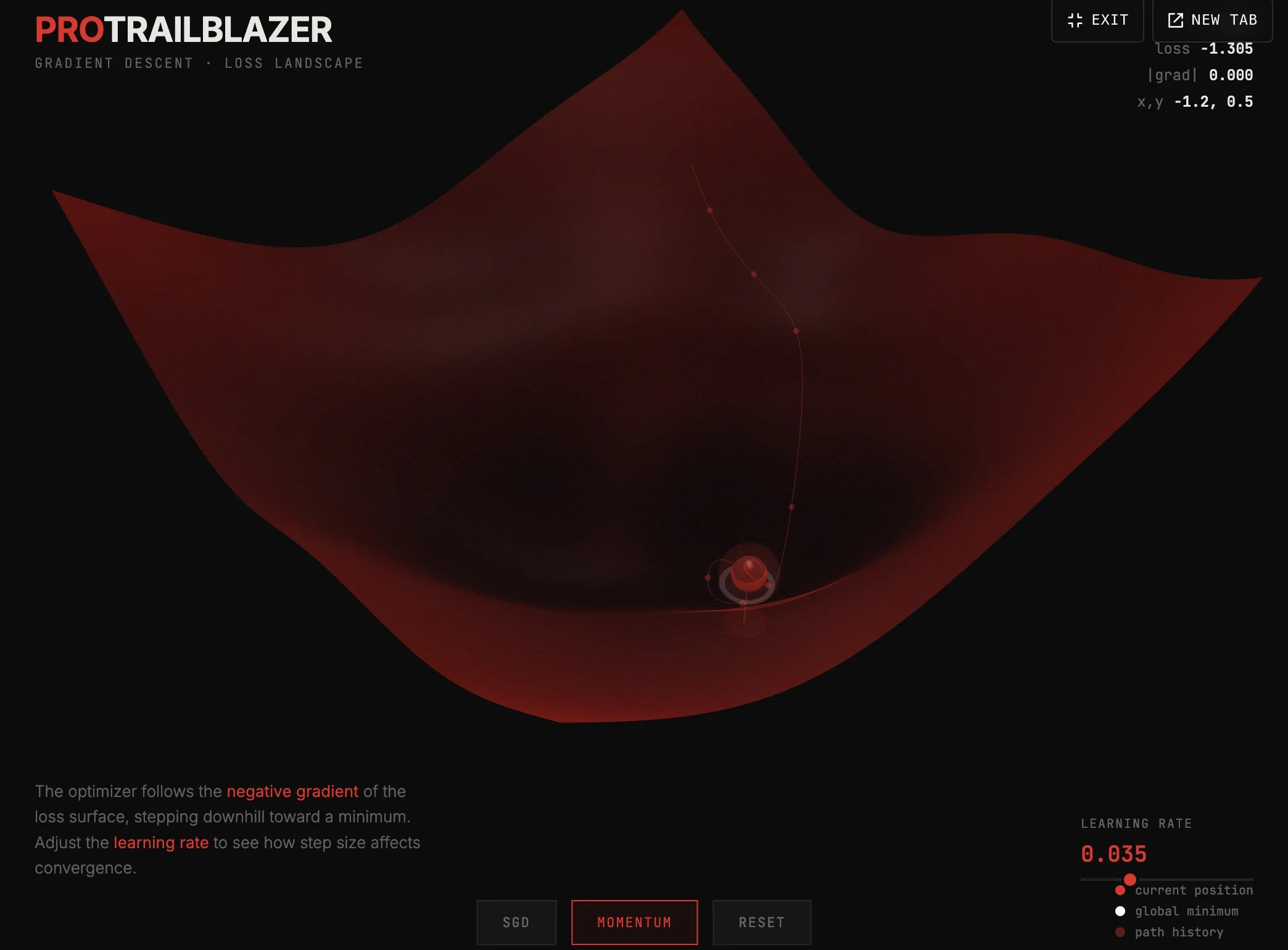 Gradient descent: how a model rolls downhillWatch a simulated model find a low spot on a 3D loss surface. A plain-English look at the optimizer that drives modern machine learning.
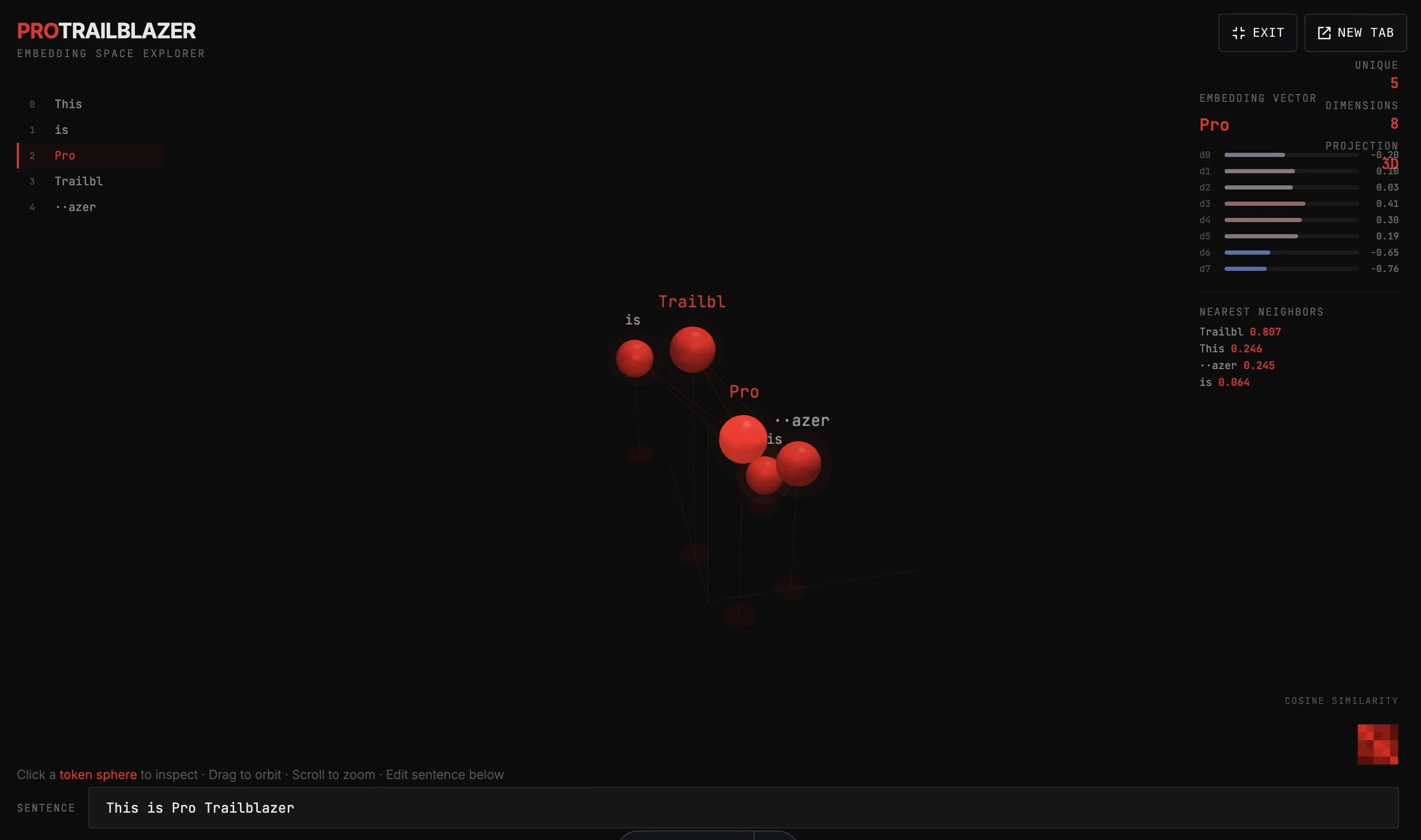 Embeddings in 3D: how models turn words into coordinatesType a sentence, watch each token land as a point in 3D space. Click any token to inspect its vector and see which other tokens it's nearest to.